Your Cart is Empty


Most people would rather say "fine" than answer "How are you feeling?" honestly. In a survey by the UK anti-stigma campaign Time to Change, 78% of people said they'd tell friends and family they were fine, even while struggling with a mental health problem.¹
Saying "fine" takes no effort. A truer answer can feel risky, yet it's often the first step toward feeling less alone.
BioNeurix® has focused on emotional wellness since 2002, and that work often starts with one honest answer. Save these replies for the next time someone asks. A few true words can change a conversation.
You don’t need a perfect answer to take your well-being seriously. Amoryn® Mood Booster is designed to support emotional health and a positive outlook alongside rest, movement, and meaningful connection.
Meet Amoryn Mood Booster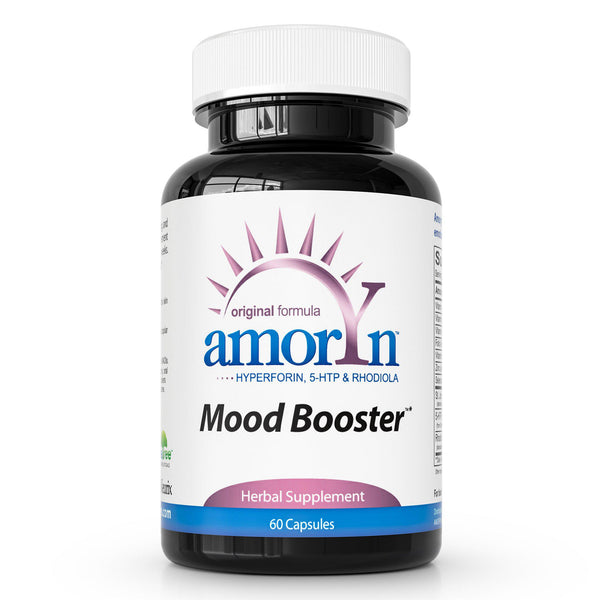
The question sounds simple, but a true answer can feel exposing. In the same Time to Change survey, 55% of people worried that the person asking didn't really want to know.³ That worry shapes the answer before you even decide what to say.
Just over half of the people surveyed, 52%, said they didn't want to burden anyone. It makes sense to feel afraid that sharing sadness, stress, or anger will bring someone else down. Some people also blame themselves for feeling low, which makes saying it out loud even harder.
Some days feel like a blur of tired, sad, and irritable all at once. When several emotions exist side by side, it's hard to describe even one of them clearly. A tool like the Feelings Wheel can help you get curious and identify what sits underneath the frustration.
Habit does much of the talking. A Mental Health Foundation survey found that UK adults say they're fine about 14 times a week, but only 19% mean it. Many people answer subconsciously, without thinking at all.²

The fastest way to find out is a private, 30-second check-in before you answer anyone else. Naming an emotion may also take some of the sting out of it. In a 2007 brain-imaging study at the University of California, Los Angeles (UCLA), people who put a word to the emotion shown in a picture had less activity in the amygdala, the brain's alarm center.⁴
Sit still for a moment and notice your jaw, shoulders, stomach, and breathing. Physical sensations often show up before the thinking mind is aware of a feeling. You might notice your shoulders creeping toward your ears long before you realize you're stressed, so bring curiosity, not judgment, to whatever is happening in your body.
Pick one plain word, such as tired, lonely, frustrated, or flat. If you're stuck, start with the six basic emotions psychologist Paul Ekman described: happiness, sadness, fear, anger, surprise, and disgust. When no word fits, get creative, like "phone at 5% battery." One accurate word beats a vague "okay."
Parents can teach children the same skill. Asking for one feeling word on the journey to school builds that ability early.
A number gives you an easy way to share later. "About a 4 today" says a lot in four words, while a 7 might mean a day with real moments of joy. Tracking the number for a week takes a little patience, but it adds a bit of awareness that makes the next conversation easier.
Finding the words is one step. Caring for yourself between conversations matters, too. Take a closer look at Amoryn® Mood Booster’s ingredients and suggested use as you consider options for everyday mood support.
See What’s In Amoryn
Instead of "fine," try a short, true reply that doesn't have to tell the whole story. Pick one that fits your energy and the person asking:
When you want space: "Not my best day, but thanks for checking in."
When you'd like to talk later: "Honestly? Rough week. Can we catch up tonight?"
When you need someone now: "Not okay right now. Do you have a few minutes?"
When the feeling is hard to name: "Hard to say. Kind of heavy and foggy today."
When you're running on empty: "Emotionally drained, to be honest. Struggling a bit."
When a number is easier: "About a 4 out of 10 today."
Add a short request if you can, such as "Can you just listen?" A clear point like that tells a friend exactly how to respond, and it keeps well-meant comments or quick fixes from taking over.

Your honesty can stay the same everywhere while the amount of detail changes. Trust, privacy, and context help you decide how much to share. Save the fuller story for people who make you feel safe.
A brief, true answer is enough in most work settings, and no one is owed the full story. Acting fine all day takes energy, so a reply like "Tough week, but managing" keeps you honest without oversharing. If stress or personal challenges start to hurt your focus, check whether your work environment offers an employee assistance program (EAP), which often includes free, confidential counseling.
With close friends, you can say more and ask for the kind of support you need: listening, advice, distraction, or simple company. Expressing that need up front saves you both from guessing.
With a doctor or therapist, specific details help most. Describe how long the feelings have lasted, how often they show up, and how they affect your sleep, appetite, work, and behavior. For example, you might say, "Hard to stay motivated for about a month." A professional can screen for depression or anxiety and help you explore what's behind the feelings.

Emotional pain needs more support when it lasts for weeks or starts to get in the way of daily life. Everyone has hard days, so watch for these signs that it may be time to talk with a doctor or mental health professional:
Lasting low mood: Feeling down, empty, or worried most days for two weeks or longer.
Daily life slipping: Struggling to keep up with work, school, or home.
Sleep or appetite changes: Sleeping or eating much more or much less than usual.
Pulling away: Avoiding people, the outside world, or activities that used to get you excited.
Leaning on substances: Using alcohol or drugs to get through the day.
Don't ignore these signs. If you wonder whether things are "bad enough" to ask for help, that question alone is a good reason to reach out. Feeling broken doesn't mean something is wrong with you as a person, and asking for help is often where healing starts.
If you're thinking about suicide or self-harm, call or text 988 to reach the 988 Suicide & Crisis Lifeline in the U.S. Call 911 if you're in immediate danger. Outside the U.S., contact local emergency services.
An honest answer to "how are you feeling?" can be short, and one true sentence counts. For everyday mood support alongside rest, movement, and good people, consider BioNeurix® Amoryn® Mood Booster, which is made to support emotional health and a positive outlook. Think of it as one part of a routine, not a replacement for talking with a professional.
Amoryn® contains St. John's Wort and 5-HTP (5-hydroxytryptophan), which can interact with many medications, including antidepressants and birth control, so check with a healthcare provider before starting. Then pick one person you trust and send one real reply today. A text works.
These statements have not been evaluated by the Food and Drug Administration. This product is not intended to diagnose, treat, cure, or prevent any disease.
Considering Amoryn® Mood Booster? Check with your healthcare provider before use, especially if you take medication. Keep it as one part of your wellness routine, not a replacement for professional mental health care.
Shop Amoryn Mood BoosterA short, true reply works best, such as "Not my best day" or "About a 5," and you can add more detail only if it feels safe.
Saying you're not okay is an honest, healthy answer, and it helps the people around you know how to support you.
Say exactly that, such as "Hard to say right now," then try a quick body scan or a feelings wheel later to find the word.
Common reasons include fear of being a burden, doubt that the other person really wants to know, and plain habit.
Choose a calm moment, start small, and say what would help, for example: "Been having a hard time lately. Could you just listen?"
Evans-Lacko, S., Corker, E., Williams, P., Henderson, C., & Thornicroft, G. (2014). Effect of the Time to Change anti-stigma campaign on trends in mental-illness-related public stigma among the English population in 2003–13: An analysis of survey data. The Lancet Psychiatry, 1(2), 121–128. https://doi.org/10.1016/S2215-0366(14)70243-3 King's College London
Gardener, A. C., Moore, C., Farquhar, M., Ewing, G., Massou, E., & Duschinsky, R. (2022). ‘I’m fine!’: Assertions of lack of support need among patients with chronic obstructive pulmonary disease: A mixed-methods study. Chronic Illness, 18(3), 574–588. https://doi.org/10.1177/17423953211000386 Sage Journals
Place2Be. (2024, February 5). “It’s still taboo”: 55% of young people face barriers in accessing mental health support. Children’s Mental Health Week. https://www.childrensmentalhealthweek.org.uk/news-and-blogs/2024/february/it-s-still-taboo-55-of-young-people-face-barriers-in-accessing-mental-health-support/ Children's Mental Health Week
Wolpert, S. (2007, June 21). Putting feelings into words produces therapeutic effects in the brain; UCLA neuroimaging study supports ancient Buddhist teachings. UCLA Newsroom. https://newsroom.ucla.edu/releases/Putting-Feelings-Into-Words-Produces-8047 newsroom.ucla.edu