Your Cart is Empty


Mood gummies seem like the easy pick. They taste like candy and skip the pill, but the label dose isn't always what's in each chew. In a 2023 study in the Journal of the American Medical Association (JAMA), 22 of 25 melatonin gummy products didn't match the label, and one had no melatonin at all.¹
Those were sleep gummies, but lab tests of vitamin gummies have found similar problems. BioNeurix® makes capsules, not gummies, so here's a fair look at both before you buy. The best choice is the one that gives you a dose you can trust.
Taste is one reason to choose a supplement, but what else matters to you? Meet BioNeurix® Amoryn® Mood Booster, a capsule option to consider as you compare formulas for your daily wellness routine.
Meet Amoryn Mood Booster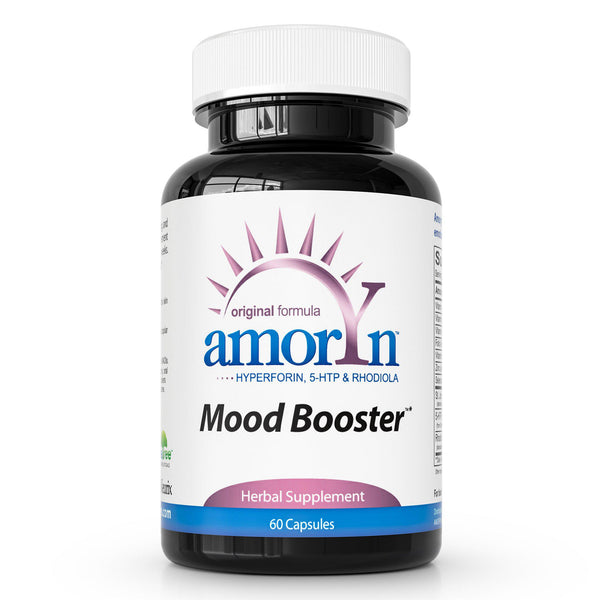
Mood gummies are chewable dietary supplements made to support a positive mood. Most pair a soft, sweet base with a combination of herbs, amino acids, or vitamins. Browse the wellness aisle, and you'll find several formulas, from daytime blends to chews meant for calm before bed.
Most gummies start with gelatin, which comes from animals, or pectin, a fiber found in fruit. Sugar or sugar alcohols add sweetness, while citric acid and natural flavors give each chew a tangy taste. Some makers also coat the pieces with plant oils or wax so they don't stick together.
People who prefer not to swallow pills often like the format. A gummy feels more like a treat than a supplement, and that's a big part of the appeal.
Common ingredients include saffron, ashwagandha, L-theanine, 5-HTP (5-hydroxytryptophan), B vitamins, and vitamin D. L-theanine is an amino acid found naturally in tea, along with caffeine. The body uses 5-HTP to make serotonin, a brain chemical tied to mood.
B vitamins help the body turn food into energy, and brands often pair them with herbs to support a steady mood. Many of these ingredients are studied over weeks of daily use, so don't count on an instant lift.

THC gummies and CBD gummies come from cannabis or hemp, so they belong in different categories than herbal mood gummies. Many products sold online as mood gummies are THC mood gummies or other cannabis edibles, often marketed as a way to escape stress. The biggest difference is THC itself, and knowing whether a product contains it keeps you in control of how you'll feel.
THC (tetrahydrocannabinol) and CBD (cannabidiol) are cannabinoids, compounds found in cannabis and hemp.³ THC causes a high, while CBD does not. Some full-spectrum products keep a full range of hemp compounds, and brands say these work better together, an idea called the entourage effect. Research on that idea is still limited.
Individual response to THC varies a lot. It can bring on the munchies, and higher doses can leave some people feeling anxious. Many people also try CBD oil for sleep or anxiety, but the U.S. Food and Drug Administration (FDA) has approved only one CBD product, a prescription drug for certain seizure disorders.⁶
Under the 2018 Farm Bill, hemp products are federally legal if they contain no more than 0.3% delta-9 THC by dry weight. A 2025 federal law replaces that rule with a cap of 0.4 milligrams of total THC per container.⁴ After a delay, signed into law in September 2026, the cap applies to hemp-derived delta-9 THC gummies starting December 11, 2026. State laws vary and can be stricter.
Leaning toward capsules? Give the formula a closer look, too. Review Amoryn® Mood Booster’s ingredients, serving directions, and precautions before choosing your next mood-support supplement.
See What’s In Amoryn
Many mood gummies match the label on the day they're made, but the dose can drift as the bottle ages. Moisture, heat, and time all work against a steady dose.
Gummies hold more water than dry pills, and that moisture can speed the breakdown of some ingredients. Heat makes it worse, so a bottle left near a sunny window or in a hot car may lose strength faster. Supplement maker NOW Foods has reported that vitamin C in gummies can drop by about 20% a year.
To make up for that loss, many makers add extra active ingredient when the gummies are made. This extra amount is called an overage. A fresh bottle may test above the label, while one near or past its expiration date may test below it.
The bottle you open this week may not match one that sat on a shelf for a year.
In a 2026 test of 25 vitamin C gummies sold on Amazon, NOW found that 48% of products from lesser-known brands failed potency testing.⁵ That's nearly half, and some had almost no vitamin C at all. So far, no large study appears to have tested mood gummies the same way, so treat these results as a warning sign rather than proof.

Capsules usually hold a dose more steadily than gummies, though they come with trade-offs too. Here's how the two forms stack up on dose and daily use:
Dose over time: Capsules hold dry powder, which tends to stay more stable than a moist gummy.
Added sugar: Most capsules contain none, while many gummies carry a few grams of sugar per serving.
Room for larger doses: A capsule can hold several hundred milligrams of powder. A gummy is mostly sugar and gelling agents, so some brands ask you to chew two or more per serving.
Heat: Capsules hold up in a hot car or mailbox, but gummies can melt or stick together.
Ease of use: Gummies win on taste and for anyone who struggles to swallow pills. Capsules take a bit more effort and a glass of water.
Capsules can mislabel claims too, so the form alone does not guarantee quality.
Reviews show how a product tastes and feels to take, but they reveal far less about whether each gummy holds the right dose. Customer reviews are still useful when you know what to look for.
Many gummy reviews come from excited new buyers after only a few days. They describe taste, texture, and smell, which helps you pick a flavor you'll enjoy. A five-star rating for a tasty chew can't show whether the dose inside was right.
Give more weight to verified buyers who took a product consistently for several weeks, since many mood ingredients need steady daily use. Watch for reports of an upset stomach, headaches, or gummies that arrived melted. Those details give a truer picture than a review written on day two.
The quickest way to find out is to check the label and the brand's website for proof of third-party testing. The FDA does not approve dietary supplements for safety or effectiveness before they reach store shelves, and outside testing fills part of that gap.⁷ Look for these signs that a product is third-party lab tested:
An independent seal: A mark from U.S. Pharmacopeia (USP) or NSF means a third-party lab checked what's in the product.
A certificate of analysis (COA): This batch report shows what the lab found. Ask the brand for one if it isn't posted online.
Good manufacturing practices: All U.S. supplement makers must follow current Good Manufacturing Practices (cGMP), so treat this as the minimum, not a bonus.
Standardized extracts: Herbs listed with a set percentage of a key compound tend to stay consistent from batch to batch.
A clear expiration date: This matters most for gummies, which can lose potency faster than capsules.

The better form for stress relief is the one you can take daily at a dose you can trust. Taste, routine, and how often you want support all play a part.
Gummies suit occasional use and people who dislike pills. Check the sugar, look for a test seal, and store the bottle away from heat. Keep gummies up high and out of reach, since kids can mistake them for candy.
If you're pregnant or a new mom nursing a baby, ask your doctor before trying any mood supplement. The Centers for Disease Control and Prevention (CDC) advises against using cannabis products, including THC gummies, while pregnant or breastfeeding.³
Capsules suit routines where a consistent dose matters most. Take your dose at the same time each day or night, such as after you wake or with lunch, so you're less likely to skip one. Taking it with food can also be gentler on the stomach.
For occasional stress, Seredyn® Complete Calm combines L-theanine, passionflower, and valerian to promote relaxation. Valerian can cause drowsiness, so see how it affects you before driving.
Gummies win on taste, while capsules win on dose consistency, sugar, and shelf life. No gummy or capsule can promise happiness, but a reliable dose gives any formula a fair test. Check the label on whatever you take now, and look for proof of testing before you spend money on another bottle.
If a measured capsule fits your routine better, try BioNeurix® Amoryn® Mood Booster, which combines St. John's Wort extract, 5-HTP, and rhodiola with B vitamins and vitamin D3 to support a positive outlook and emotional balance. St. John's Wort and 5-HTP can interact with many prescription medications, including antidepressants and birth control, so talk to a healthcare provider first. Every order comes with a 100% money-back guarantee.
These statements have not been evaluated by the Food and Drug Administration. This product is not intended to diagnose, treat, cure, or prevent any disease.
Take the next step with BioNeurix® Amoryn® Mood Booster, backed with a 100% money-back guarantee. Check with your healthcare provider before use, especially if you take medication.
Shop Amoryn Mood BoosterResults depend on the ingredient, the amount, and whether each gummy still holds that amount, so compare label doses with those used in research on ingredients like saffron.
They can be when the dose and quality match, but gummies tend to lose potency faster, while capsules and tablets stay stable longer.
Timing varies by ingredient, since L-theanine may be noticed the same day while St. John's Wort or 5-HTP often needs several weeks of daily use.
Many are labeled for daily use, but the sugar adds up and some herbs interact with medications, so follow the label and check with a provider.
Only with medical advice, because St. John's Wort and 5-HTP raise serotonin activity and may cause a dangerous reaction when combined with some antidepressants.
Blum, D. (2023, April 25). 22 out of 25 melatonin products were mislabeled, study finds. The New York Times. https://www.nytimes.com/2023/04/25/well/live/melatonin-gummies-mislabeled-sleep.html ronniestanglermd.com
Centers for Disease Control and Prevention. (2025, January 31). Cannabis and pregnancy. U.S. Department of Health and Human Services. https://www.cdc.gov/cannabis/health-effects/pregnancy.html CDC
National Center for Complementary and Integrative Health. (2019, November). Cannabis (marijuana) and cannabinoids: What you need to know. U.S. Department of Health and Human Services, National Institutes of Health. https://www.nccih.nih.gov/health/cannabis-marijuana-and-cannabinoids-what-you-need-to-know NCCIH
Neuhofer, Z. T. (2026, September 28). Changes to the statutory definition of hemp and implications for agricultural policy (CRS Report No. IF13136). Congressional Research Service. https://www.congress.gov/crs-product/IF13136 legistorm.com
NOW Foods. (2026, August 19). NOW tests vitamin C gummy supplements sold on Amazon. https://www.nowfoods.com/healthy-living/articles/now-tests-vitamin-c-gummy-supplements-sold-amazon NOW Foods
U.S. Food and Drug Administration. (2020, March 5). What you need to know (and what we’re working to find out) about products containing cannabis or cannabis-derived compounds, including CBD. U.S. Department of Health and Human Services. https://www.fda.gov/consumers/consumer-updates/what-you-need-know-and-what-were-working-find-out-about-products-containing-cannabis-or-cannabis U.S. Food and Drug Administration
U.S. Food and Drug Administration. (2026, August 27). Questions and answers on dietary supplements. U.S. Department of Health and Human Services. https://www.fda.gov/food/information-consumers-using-dietary-supplements/questio