Your Cart is Empty


Ask most people how they feel, and the answer is "good," "bad," or "fine." That's three words for hundreds of states, and it skips most of the types of moods a person moves through in a single week.
The words you pick matter. Psychologist Lisa Feldman Barrett calls the skill of telling feelings apart "emotional granularity," and two decades of research tie it to better well-being.¹
Emotional wellness sits at the heart of BioNeurix®, and naming a mood is the simplest place to start. Bookmark this list and find today's mood in it, because a sharper word is the first step toward a steadier day.
Understanding your mood is the first step. For daily support in maintaining a positive outlook and emotional wellness, explore the natural ingredients in Amoryn.
Discover Amoryn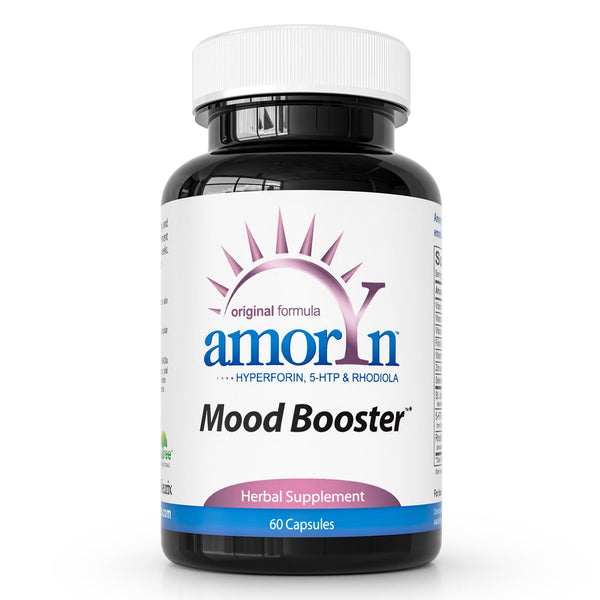
A mood is the emotional tone that colors a whole day. It runs quieter than an emotion but lasts longer, and the predominant mood of a day shapes how a person feels about almost everything else.
Moods can last hours or days. They tend to feel milder than intense emotions and may have no obvious cause, which is why a bad mood can show up on a day when nothing went wrong.
An emotion is a quick reaction to something specific, like a flash of anger at a rude driver. It can rise and fade in a moment. A grumpy mood can linger all afternoon with no clear trigger, and it sets the background for many emotional experiences in a row.

Psychologists often sort the different types of moods along two lines: how pleasant they feel and how much energy they carry. Grouping moods based on those two lines makes them easier to spot. A handful of clinical terms add even more detail.
The first line runs from unpleasant to pleasant. A positive mood, such as joy or contentment, sits at one end. A negative mood, such as sadness or fear, sits at the other.
The second line runs from drained to wired, so it tracks your energy level. The Yale Center for Emotional Intelligence crosses these two lines in its Mood Meter, which forms four color-coded quadrants.
Doctors and therapists use more exact labels. A stable mood in a normal range is called euthymic, while a dysphoric mood feels uneasy or dissatisfied. An elevated mood is unusually high, and an irritable mood means getting annoyed easily. A labile mood shifts quickly, which can be a sign of emotional instability.
Clinicians also use "mood" for what a person reports and "affect" for what others can see, such as facial expressions and tone of voice.
A list of moods is easiest to use when it's grouped by energy and pleasantness. Here are common moods in each group, each with an everyday example:
Pleasant, high energy (yellow): Excited, cheerful, hopeful, proud, or playful, like the afternoon a job offer comes through.
Pleasant, low energy (green): Calm, content, relaxed, grateful, or peaceful, like a slow Sunday with coffee and nowhere to be.
Unpleasant, high energy (red): Anxious, irritable, tense, frustrated, or restless, like running late while every light turns red.
Unpleasant, low energy (blue): Sad, lonely, drained, gloomy, or disappointed, like a gray afternoon after bad news.
The colors come from the Yale Mood Meter, which places an anxious mood in red and a lonely mood in blue. Moods can also blend, so feeling tired but hopeful is a real combination.
While daily habits influence your mood, a targeted supplement can provide extra support. Amoryn combines key ingredients designed to promote emotional health.
Learn More
Different moods usually have a trigger, even when it's hard to spot. Daily habits, body signals, and life events often tip the balance one way or the other.
Short or broken sleep often brings a low or irritable mood, and it can make you feel angry over small things. Morning light helps set the body clock, which shapes your energy through the rest of the day.
Long gaps between meals can leave anyone cranky. Regular meals support your physical health, and many people notice a more even mood when they don't skip them.
Ongoing stress, menstrual cycles, and perimenopause can all nudge mood, and perimenopause leaves some people feeling anxious or tearful. Moods also dip when people face challenges like a move, a breakup, or a new baby, since life events like these can change a person's life for weeks. A medical condition, such as a thyroid problem, can affect mood too, so lasting mood changes are worth a checkup.

Mood disorders are mental health conditions in which mood changes become intense or long-lasting enough to disrupt daily life. Everyday mood swings are normal. The American Psychiatric Association's diagnostic manual, the DSM-5-TR (Diagnostic and Statistical Manual of Mental Disorders, Fifth Edition, Text Revision), groups mood disorders into two main types.¹²³⁴⁵⁶⁷⁸
Depressive disorders center on a depressed mood or a loss of interest in things you used to enjoy. Major depression, also called major depressive disorder, involves symptoms most of the day, nearly every day, for at least two weeks. It goes beyond a few days when you feel sad, and it often brings physical symptoms, like changes in sleep and appetite, along with other symptoms such as trouble focusing.
Persistent depressive disorder is a milder but longer-lasting low mood that's present most days for at least two years in adults. Premenstrual dysphoric disorder (PMDD) brings severe mood symptoms in the week or so before a period. Seasonal affective disorder is classified as major depression with a seasonal pattern.
Bipolar disorder involves shifts between low moods and emotional highs. Bipolar I includes at least one manic episode, which can sometimes come with psychotic symptoms. Bipolar II involves milder highs, called hypomania, along with periods of depression, and cyclothymic disorder brings milder ups and downs that last at least two years in adults.
Each of these is a mental health condition that only a doctor or mental health professional can diagnose. Anxiety disorders sit in a separate group, even though anxiety often shows up alongside low mood. If a low mood lasts most days for two weeks or more, talk with a doctor and seek professional help. In a crisis, call or text 988 in the U.S.

Better ways to describe mood swap vague words for precise ones. A sharper word helps you, and the people around you respond better. Try these swaps:
When you feel bad: Try drained, tense, discouraged, or lonely.
When you're in a good mood: Try energized, content, relieved, or hopeful.
When you're stressed: Try rushed, overwhelmed, pressured, or on edge.
When something feels off: Try foggy, restless, flat, or uneasy.
When you want to add detail: Pair energy with a number, such as "Low energy, about a 4 out of 10."
The effort pays off. In research on emotional granularity, people who struggled to tell feelings apart had a harder time calming negative emotions.
Pause, pick one word and one color for the mood you're in right now, and write them down. Do it daily for a week, and patterns in your own life will start to show, such as lower moods after short nights.
For daily support toward a brighter, steadier outlook, consider BioNeurix® Amoryn® Mood Booster, which combines St. John's Wort extract, 5-HTP (5-hydroxytryptophan), and rhodiola with B vitamins and vitamin D3 to support emotional health and a positive outlook.
Amoryn® can interact with many medications, including antidepressants and birth control, so check with a healthcare provider before starting, and treat it as part of a routine, not a replacement for professional care. Start with today's word.
These statements have not been evaluated by the Food and Drug Administration. This product is not intended to diagnose, treat, cure, or prevent any disease.
You’ve learned to name your mood—now give it the support it deserves. Incorporate Amoryn into your daily routine for a brighter, more balanced perspective.
Shop Amoryn NowEmotions are brief reactions to a specific event, while moods last longer, feel milder, and may not have a clear cause.
There's no fixed number, but many psychologists group moods into four families based on energy and pleasantness, with dozens of words in each.
Clinicians call a stable, typical mood "euthymic," which means a steady middle range rather than constant happiness.
A mild mood shift tied to sleep, meals, light, or stress is common, but big swings that disrupt work or relationships are worth raising with a doctor.
Major depressive disorder and bipolar disorder are among the best known, along with persistent depressive disorder and cyclothymic disorder, and only a qualified professional can diagnose them.
Barrett, L. F., Atzil, S., Bliss-Moreau, E., Chanes, L., Gendron, M., Hoemann, K., Katsumi, Y., Kleckner, I. R., Lindquist, K. A., Quigley, K. S., Satpute, A. B., Sennesh, E., Shaffer, C., Theriault, J. E., Tugade, M., & Westlin, C. (2025). The Theory of Constructed Emotion: More Than a Feeling. Perspectives on psychological science : a journal of the Association for Psychological Science, 20(3), 392–420. https://doi.org/10.1177/17456916251319045
First, M. B., Yousif, L. H., Clarke, D. E., Wang, P. S., Gogtay, N., & Appelbaum, P. S. (2022). DSM-5-TR: overview of what's new and what's changed. World psychiatry : official journal of the World Psychiatric Association (WPA), 21(2), 218–219. https://doi.org/10.1002/wps.20989