Your Cart is Empty


Some days the smallest thing sets you off. A short text, a spilled coffee, a kind word from a stranger, and suddenly your eyes well up or your chest tightens. If you have caught yourself asking, “Why am I so emotional lately?”, you are not broken, and you are far from alone.
Strong feelings are a normal part of being human, and they usually have a cause you can trace and manage. The reasons range from too little sleep to hormonal changes to plain old stress, and most respond well to simple, steady habits.
Bioneurix makes Amoryn Mood Booster for the everyday end of that range, where gentle daily mood support helps. Here are nine common reasons emotions run high, how to calm them in the moment, and when it is worth reaching out for help.
A hard week, poor sleep, and everyday stress can leave your mood feeling less steady than usual. Amoryn Mood Booster brings together 5-HTP, rhodiola rosea, vitamin D3, and B vitamins to support a positive outlook and healthy, balanced mood as part of your everyday wellness routine.
Explore Amoryn Mood Booster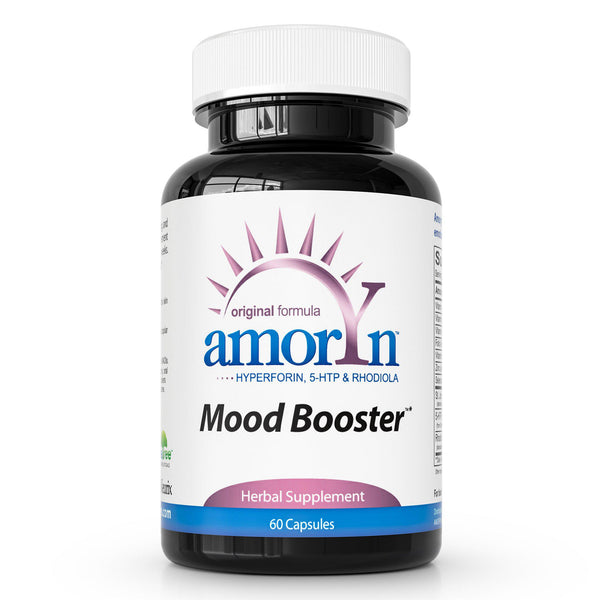
You feel emotional all of a sudden when something knocks your nervous system off balance, and heightened emotions are the result.² Feelings do not spike at random. Poor sleep, stress hormones, a shift in your cycle, or a hard week all lower your buffer, so ordinary moments hit harder. The feeling is real, and it usually points to a cause worth understanding rather than fearing.
Emotions are signals, not flaws. A wave of sadness, anger, or overwhelm is your mind and body telling you something needs attention, whether that is rest, a break, or support. Once you spot the root cause, the emotional response starts to make sense.
Most heightened emotions trace back to a handful of everyday causes.⁵ Knowing which one fits your week helps you respond to the real problem instead of guessing. The most common reasons include:
Lack of sleep and stress top the list for good reason.⁴ When you run short on rest, the brain struggles to regulate emotions, so small problems feel huge. Hormonal shifts play a big role too, which is why many people feel extra emotional at certain points in the month. If none of these seem to fit and the intensity keeps climbing, that is a sign to look a little deeper.
You can calm strong emotions in the moment by slowing your body down first, which helps the feeling pass. When emotions surge, the nervous system is in overdrive, so the fastest relief comes from steadying your breath and body rather than fighting the feeling. Three simple resets work almost anywhere.
Slow breathing tells your body the alarm can switch off. Try breathing in for four counts, holding for four, and out for four. These deep breathing exercises ease a racing heart and give intense emotions room to settle.
Putting a word to the feeling takes away some of its power. Instead of “I feel awful,” try to pinpoint it: frustrated, hurt, anxious, or tired. Naming the emotion helps your thinking brain step back in and stay in the present moment.
A little movement burns off emotional energy. A short walk, a stretch, or shaking out your arms can shift your state fast. Physical activity releases tension and often clears the fog around a strong feeling.

You support a steadier mood day to day by protecting the basics that keep emotions balanced. Good sleep, regular meals, movement, and connection build a foundation that makes big feelings less frequent and easier to ride out. Small, repeatable habits matter more than any single fix.
Sleep is the strongest lever you have. Getting enough sleep on a steady schedule helps the brain regulate emotions, so aim for consistent bed and wake times. A calmer routine steadies your whole day.
What you eat shapes how you feel. Balanced meals with protein, whole grains, and vegetables keep blood sugar steady and support emotional well-being. Time outdoors and regular movement lift mood too.
A steady routine can include daily mood support. Amoryn Mood Booster from Bioneurix blends 5-HTP, rhodiola rosea, and vitamins like D3 and B vitamins to support a positive outlook and a healthy, balanced mood. It is meant for everyday emotional ups and downs in healthy people, not as a treatment for a mental health condition. Talk to your doctor before trying it if you take any medication, since some ingredients can interact with prescriptions such as antidepressants.
Breathing, movement, sleep, and balanced meals all help create a stronger foundation for emotional wellness. Amoryn Mood Booster can complement those habits with ingredients selected to support a healthy mood and positive outlook during everyday emotional ups and downs.
Add Daily Mood SupportTalk to a professional when heightened emotions stick around, feel unmanageable, or start affecting daily life. Everyday emotional waves pass, but some signals point to something a doctor or counselor can help with. Reaching out is a strength, not a failure.
Consider professional support if you notice any of these signs:
Ongoing sadness, hopelessness, or anxiety that lasts for weeks
Emotions that feel too big to control
Feelings tied to a past trauma that keep resurfacing
Mood changes that disrupt work, sleep, or relationships
A mental health professional can help you find the root cause, whether that is chronic stress, a mood-related condition, or a hormonal imbalance, and build a plan that fits you. If your emotions ever include thoughts of harming yourself, treat that as urgent and reach out right away to a doctor, a crisis line, or emergency services, or lean on a trusted person nearby. You deserve real support, and help is available.

Feeling emotional is human, and the reasons usually make sense once you look. Short sleep, chronic stress, hormonal changes, and a heavy week are among the most common causes, and each one responds to steady care. Slow breathing, naming your feelings, movement, good sleep, and balanced meals give your mind room to settle and your emotions room to pass.
For gentle, everyday mood support, Amoryn Mood Booster from Bioneurix helps healthy people keep a positive, balanced outlook, while lasting or overwhelming feelings still call for a professional. Start with one small habit today, and be as patient with yourself as you would be with a friend.
Understanding what drives strong emotions is a useful first step. Keep building on it with steady sleep, nourishing meals, movement, and Amoryn Mood Booster for convenient everyday support of a positive outlook and healthy, balanced mood.
Shop Amoryn Mood BoosterFeeling extra emotional lately is often caused by poor sleep, chronic stress, hormonal changes, or feeling overwhelmed, all of which make it harder for the brain to regulate emotions.
Crying easily can come from stress, tiredness, hormonal shifts, or simply being a highly sensitive person, and it is a normal release rather than a sign of weakness.
Not usually, since strong emotions are normal, but feelings that last for weeks, feel unmanageable, or disrupt daily life are worth discussing with a mental health professional.
Slow breathing, naming what you feel, regular movement, enough sleep, and steady meals all help you control emotions and respond calmly instead of reacting.
Yes, hormonal changes from premenstrual syndrome (PMS), pregnancy, and menopause can heighten emotions, which is why many people feel more sensitive at certain times.
Anderson L. (2020). Skipping Meals Is Associated With Symptoms of Anxiety and Depression in U.S. Older Adults. Innovation in Aging, 4(Suppl 1), 515. https://doi.org/10.1093/geroni/igaa057.1663
Kozubal, M., Szuster, A., & Wielgopolan, A. (2023). Emotional regulation strategies in daily life: the intensity of emotions and regulation choice. Frontiers in psychology, 14, 1218694. https://doi.org/10.3389/fpsyg.2023.1218694
Ranabir, S., & Reetu, K. (2011). Stress and hormones. Indian journal of endocrinology and metabolism, 15(1), 18–22. https://doi.org/10.4103/2230-8210.77573
Shah, A. S., Pant, M. R., Bommasamudram, T., Nayak, K. R., Roberts, S. S. H., Gallagher, C., Vaishali, K., Edwards, B. J., Tod, D., Davis, F., & Pullinger, S. A. (2025). Effects of Sleep Deprivation on Physical and Mental Health Outcomes: An Umbrella Review. American journal of lifestyle medicine, 15598276251346752. Advance online publication. https://doi.org/10.1177/15598276251346752
Šimić, G., Tkalčić, M., Vukić, V., Mulc, D., Španić, E., Šagud, M., Olucha-Bordonau, F. E., Vukšić, M., & R Hof, P. (2021). Understanding Emotions: Origins and Roles of the Amygdala. Biomolecules, 11(6), 823. https://doi.org/10.3390/biom11060823