Your Cart is Empty


Someone asks, “How are you feeling today?”, and your mind goes blank. You know something is stirring, but the right word will not come, so you shrug and say “fine.” That gap between what you feel and what you can name is common, and it has a simple fix.
The Feelings Wheel is a tool that turns a fuzzy mood into a clear word you can point to. Naming a feeling is the first step to understanding it, and understanding it is the first step to feeling steadier.
Bioneurix makes Amoryn Mood Booster for people who want to pair those daily check-ins with gentle mood support. Here is what the wheel is, why feelings are so hard to name, and how to use it in under a minute.
The Feelings Wheel can help you put a clear name to what is going on inside. Pair that daily check-in with Amoryn Mood Booster, made with 5-HTP, rhodiola rosea, vitamin D3, and B vitamins to support a positive outlook and healthy, balanced mood.
Explore Amoryn Mood Booster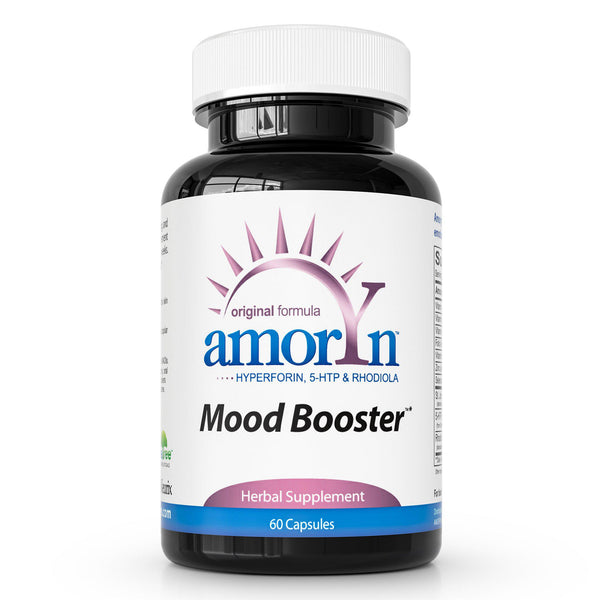
The Feelings Wheel is a circular chart that helps you name an emotion by moving from broad feelings to specific ones.² Developed by psychologist Dr. Gloria Willcox in the early 1980s, it groups emotions into layers so you can pinpoint what you feel instead of settling for a vague label. Think of it as a map for your inner world.
The wheel lays out emotions the way a map lays out streets. Related feelings sit near each other, so you can travel from a general mood to a precise word. That structure makes a messy inner state easier to read.
At the center sit a handful of core emotions, like happy, sad, angry, surprised, and scared. These are the broad, basic feelings everyone knows. They are the starting point for a closer look.
The outer rings break each core feeling into finer shades. “Sad” might branch into lonely, hurt, or disappointed, while “happy” might open into excited, hopeful, or content. Those nuances help you name what you actually feel.

Naming a feeling is hard because most people never build an emotional vocabulary big enough to do it. Strong feelings also blur together, and daily life trains you to answer on autopilot.¹ The wheel helps because it hands you the words you are missing.
Many of us grow into adulthood with only a few feeling words. Beyond good, bad, and tired, the vocabulary runs thin. Without the words, the feeling stays fuzzy and hard to work with.
Intense emotions rarely arrive one at a time. Stress, sadness, and frustration can hit at once and smear into a single heavy mood. Pulling them apart is tough without a tool to sort them.
“Fine” is the reflex answer, not the true one. When someone asks how you are, habit takes over before you actually check in. That autopilot keeps you from noticing what is really going on.
You use the Feelings Wheel by starting broad and working outward until a word clicks. It works best as a quick, guided check-in that takes about a minute. Follow these steps:
Start at the center with a core emotion
Move outward toward more specific words
Pick the word that fits closest
Notice where the feeling sits in your body
Name what set the feeling off
Begin with the closest core feeling, even if it is rough, then follow that branch outward until a more exact word rings true. Pay attention to your body too, since a tight chest or a heavy stomach often points to the emotion before your mind catches up. Finish by asking what triggered the feeling, which turns a vague mood into useful information you can act on.
Naming your feelings is one useful step. Supporting the habits around them matters too. Alongside good sleep, movement, sunlight, and connection, Amoryn Mood Booster can complement a daily routine focused on maintaining a healthy, positive mood.
Add Daily Mood SupportNaming feelings matters because putting a word to an emotion changes how it lands and how you respond. Research on emotional granularity, the skill of labeling feelings precisely, links it to calmer reactions and better coping. In short, the more exactly you can name a feeling, the more control you have over it.
A named feeling loses some of its grip. When you can say “I feel anxious” instead of just feeling swept away, the thinking part of your brain steps back in. That small shift often cools an intense reaction.
Clear feeling words make you easier to understand. Telling a friend you feel overwhelmed, rather than snapping or going quiet, opens a real conversation. Naming emotions helps people meet you where you are.
Regular naming builds a sharper sense of yourself. Over time, you start to spot patterns, like which situations drain you or lift you. That self-awareness is the foundation of emotional intelligence.

You support a steadier mood by pairing daily emotional check-ins with habits that keep you balanced. The wheel works best alongside good sleep, movement, sunlight, and connection, since a check-in tells you how you feel and healthy habits help you feel better. Small, repeatable steps carry the most weight.
A quick daily check-in builds the habit. Take a minute in the morning or evening to name how you feel and why. Over time, this simple practice sharpens your emotional literacy.
Your body and mood move together. A short walk, some stretching, or a few minutes of morning sunlight can lift your mood. These easy habits give any check-in something to build on.
A steady routine can include daily mood support. Amoryn Mood Booster from Bioneurix blends 5-HTP, rhodiola rosea, and vitamins like D3 and B vitamins to support a positive outlook and a healthy, balanced mood. It is meant for everyday emotional ups and downs in healthy people, not a treatment for a mood condition, so talk to your doctor first if you take any medication.
The next time someone asks how you are feeling, you will have more than a blank stare and a quick “fine.” The Feelings Wheel gives you the words to move from a vague mood to a clear emotion, and naming that emotion is what helps it settle. Pair a one-minute daily check-in with good sleep, movement, and sunlight, and your emotional awareness grows week by week.
For gentle, everyday mood support alongside those habits, Amoryn Mood Booster from Bioneurix helps healthy people keep a positive, balanced outlook. Take a minute right now, find your word, and start paying closer attention to how you truly feel.
Your daily mood can shift, but your wellness routine can stay consistent. Keep checking in with how you feel, support the basics that help you stay balanced, and add Amoryn Mood Booster for convenient everyday support of a positive outlook and healthy mood.
Shop Amoryn Mood BoosterThe Feelings Wheel is a circular chart that helps you name an emotion by starting with a broad core feeling at the center and moving outward to more specific words.
Psychologist Dr. Gloria Willcox developed the Feelings Wheel in the early 1980s as a tool to help people identify and communicate their emotions.
The core emotions at the center typically include happy, sad, angry, surprised, scared, and disgusted, each branching into more specific feelings on the outer rings.
Pause and check in instead of saying “fine,” then name the closest core feeling and refine it into a more exact word, like content, drained, or hopeful.
Naming your emotions precisely, a skill called emotional granularity, is linked to calmer reactions, better communication, and stronger self-awareness.
Okon-Singer, H., Hendler, T., Pessoa, L., & Shackman, A. J. (2015). The neurobiology of emotion-cognition interactions: fundamental questions and strategies for future research. Frontiers in human neuroscience, 9, 58. https://doi.org/10.3389/fnhum.2015.00058
Willcox, G. (1982). The Feeling Wheel: A Tool for Expanding Awareness of Emotions and Increasing Spontaneity and Intimacy. Transactional Analysis Journal, 12(4), 274–276. https://doi.org/10.1177/036215378201200411