Your Cart is Empty


We all know that awful feeling of being completely exhausted but too wired to actually rest. Your mind races, your energy crashes, and getting through a normal day feels like climbing a mountain. Plant-based adaptogenic herbs are often used to support the body’s stress response, but choosing between rhodiola vs ashwagandha can still feel confusing.
Both herbs have been studied for stress support, overall well-being, and mood support, but the effects are not identical, and the strength of the evidence varies across outcomes. Understanding how rhodiola and ashwagandha may affect energy levels, sleep quality, and mental clarity can help you choose a more suitable option for stress management.
If stress shows up as nervous tension, racing thoughts, or trouble settling down, a calming formula may be a better fit for your daily routine.
Check Out Seredyn Complete Calm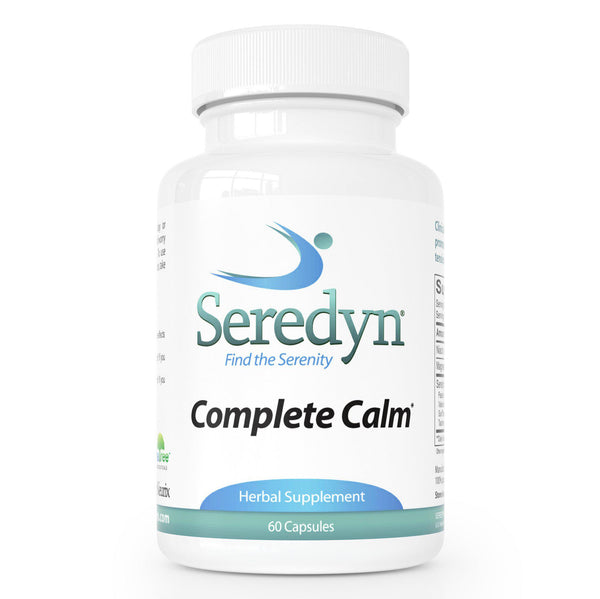
Rhodiola rosea is an herb with a long history of use in traditional medicine, especially in cold regions, where it was used to support stamina and alleviate stress-induced fatigue. Today, rhodiola and ashwagandha are often compared, as rhodiola is often discussed in connection with mental performance, physical endurance, and mental vitality. Even so, the clinical evidence for Rhodiola rosea is still mixed, and older reviews have noted methodological flaws in several studies³.
Some small studies suggest rhodiola may support the body’s stress response and may help with stress-induced fatigue, perceived exertion, and mental performance in some adults. One placebo-controlled study also reported a lower cortisol response to awakening stress in a group with fatigue symptoms. Still, rhodiola should not be described as directly targeting the adrenal glands, controlling cortisol levels in a fixed way, or preventing panic during acute stress.
Rhodiola is often described as the more activating option in the rhodiola vs ashwagandha comparison. Some people use a rhodiola supplement to sustain energy, improve mental focus, and enhance mental clarity on demanding days. That said, responses vary, and NCCIH notes that rhodiola can cause insomnia, headache, and dizziness, so a morning or early-afternoon dose is usually the safer option.

Ashwagandha is a well-known herb in Ayurvedic and traditional medicine, often called Indian ginseng. It is commonly used to support relaxation, reduce stress, and promote overall health. Research suggests that some ashwagandha preparations may help with stress and sleep quality, although NCCIH says the evidence is still unclear for anxiety itself². That makes ashwagandha a better fit for careful structure/function language than for treatment-style promises about mental health conditions.
Ashwagandha may support the body’s stress response and promote relaxation in some healthy adults, which is why it often comes up in conversations about stress, anxiety, chronic stress, and mood support. It is more accurate to say that ashwagandha may help the body manage stress than to claim it directly targets one brain pathway, such as gamma-aminobutyric acid (GABA)⁴, in a proven way.
Some ashwagandha preparations may support sleep quality in people whose sleep problems are linked with stress response and elevated stress levels. The evidence is promising enough to mention sleep support, but the copy should avoid saying ashwagandha treats insomnia or guarantees better rest.
Important note: These patterns can be useful, but they are not hard rules, and both herbs can affect people differently depending on dose, timing¹, product type, and individual response.
Rhodiola and ashwagandha are often described as affecting the nervous system in different ways, but the cleanest wording is still practical rather than overly mechanistic. Rhodiola is usually chosen when stress leaves a person mentally drained, physically flat, or low on sustained energy. Ashwagandha is more often chosen when stress shows up as feeling wired, restless, or unable to settle down. That framing is more accurate than claiming one raises sympathetic tone while the other boosts parasympathetic tone in a fixed, proven way.
Some people use rhodiola and ashwagandha together for stress management, taking rhodiola earlier in the day and ashwagandha later. Research on that exact combination is limited, so the safest approach is to introduce one herb at a time, monitor energy levels and sleep quality, and consult a healthcare professional if medication use or health conditions are involved. That matters even more if a history of upset stomach or sensitivity to herbal supplement products is involved.
When daily stress starts to feel constant, adding a calm-focused supplement may help support a steadier mood and a more relaxed end to the day.
See the Calm FormulaTiming can shape how each herb feels. Rhodiola is often taken earlier in the day because it is linked with energy levels, physical endurance, and mental focus. Ashwagandha is often used later in the day because drowsiness can occur in some users, and some preparations have been studied for sleep quality.
A morning or early afternoon dose is usually the better option for rhodiola supplementation. That timing aligns with the herb’s more activating reputation and helps reduce the risk of insomnia later at night.
Ashwagandha is often taken in the late afternoon or evening to promote relaxation and support wind-down. Some people do use it earlier in the day, but evening use is a common fit when stress levels rise at night or when poor sleep quality is a problem.
There is no standard clinical guideline stating that rhodiola or ashwagandha must be cycled to prevent tolerance. Evidence on long-term use is limited for both herbs, so it is advisable to follow product directions, watch for side effects, and consult a healthcare professional when considering longer-term use.
Finding a reliable product starts with the label. A stronger supplement page usually lists the exact plant, the amount of extract, the plant part used, and any standardization details the company provides. Third-party testing also helps support quality control.
Look for a product that clearly says rhodiola rosea, lists the extract amount, and explains any standardization or active compounds used to describe the formula. That kind of labeling makes products easier to compare. It is safer than promising “the best” physical or mental performance from a single ratio alone, because rhodiola clinical evidence still includes varied preparations and mixed results.
Look for a formula that clearly lists the plant part and withanolide content if the company provides it. Many shoppers prefer root extract because it is commonly used in the market and in research discussions, but the stronger quality signal is still a clear label, sensible dosing, and independent testing rather than language that calls the product a medicine.
Standardization can help create a more consistent herbal supplement by indicating the amounts of specific compounds in each serving. That makes products easier to compare across brands. It does not prove a formula will produce the same result seen in a placebo-controlled study, and it should not be used as a shortcut for disease-treatment language.

Creating a structured daily plan can make stress management feel more consistent. A simple routine might include a morning rhodiola dose with breakfast when the goal is to boost energy, reduce fatigue, or support mental clarity at work. Ashwagandha can fit later in the day when the goal is to promote relaxation and support wind-down. Deep breathing, morning light exposure, movement, and steady meals still matter because supplements work best as part of a broader health regimen.
Choosing between rhodiola and ashwagandha comes down to the pattern of stress in daily life. Rhodiola is more often discussed for mental clarity, stress-induced fatigue, physical endurance, and sustained energy. Ashwagandha is more often discussed for promoting relaxation, stress reduction, sleep quality, and overall well-being. Neither herb should be framed as a cure for stress and anxiety, and response can vary by person, dose, product, and health conditions. A careful, measured approach is the safest fit.
If you are leaning toward a more calming approach, explore a product designed to support relaxation and everyday stress balance.
Shop Seredyn Complete CalmIt depends on how stress shows up. Ashwagandha may be a better fit when stress and poor sleep co-occur, while rhodiola may be more appealing when stress feels draining and impairs mental focus. Anxiety-specific evidence is still mixed, especially in consumer guidance.
Some people do, but research on the combination is limited. A safer approach is to introduce one herb at a time and ask a healthcare professional about medication interactions or other health concerns.
Rhodiola is often described as more activating, while studies on ashwagandha often examine outcomes over several weeks. Still, timing varies, and neither herb should be sold with a guaranteed speed claim.
Ashwagandha may be the better fit when stress and poor sleep co-occur, because some preparations have been studied for insomnia and can cause drowsiness. Rhodiola can be activating and may cause insomnia in some users.
Short-term use is better supported than long-term use. NCCIH describes rhodiola as possibly safe for up to 12 weeks and ashwagandha as possibly safe in the short term, but both can interact with medications and cause side effects.
National Center for Complementary and Integrative Health. (2019, January). Using dietary supplements wisely. U.S. Department of Health and Human Services. https://www.nccih.nih.gov/health/using-dietary-supplements-wisely
National Center for Complementary and Integrative Health. (2023, March). Ashwagandha. U.S. Department of Health and Human Services. https://www.nccih.nih.gov/health/ashwagandha
National Center for Complementary and Integrative Health. (2025, April). Rhodiola. U.S. Department of Health and Human Services. https://www.nccih.nih.gov/health/rhodiola
National Institute of Neurological Disorders and Stroke. (n.d.). Brain basics: Know your brain. U.S. Department of Health and Human Services. https://www.ninds.nih.gov/health-information/public-education/brain-basics/brain-basics-know-your-brain