Your Cart is Empty


If a little vitamin D is good, a lot must be better. That math feels right, and it's one reason people reach for high-dose vitamin D supplements for anxiety. With vitamin D, the math doesn't hold up.
Large studies haven’t shown that vitamin D eases anxiety for most people, and taking more adds risk without clear benefit. BioNeurix®’s mood formula, Amoryn, contains 400 IU of vitamin D3 per capsule, so this topic hits close to home. The right dose depends on your actual vitamin D levels, and bigger doesn't always mean better.
Amoryn contains Vitamin D3 (as cholecalciferol) among its ingredients. Review the full formula, directions, and precautions as you decide what belongs in your wellness routine.
View Amoryn Product Details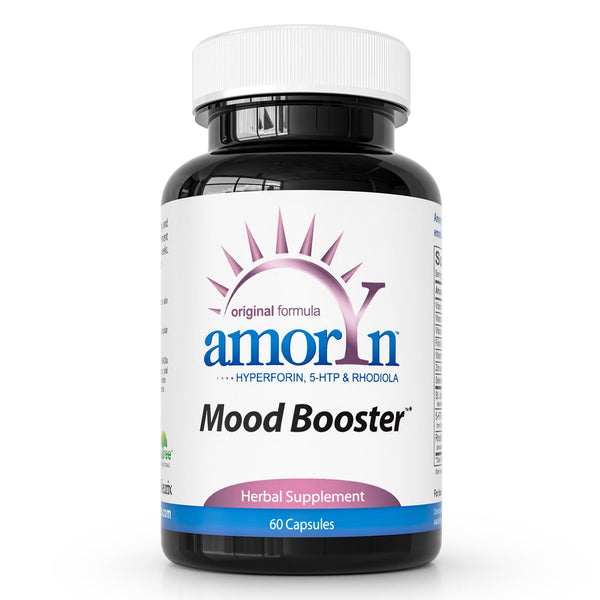
For most people, clinical trials haven't shown that vitamin D supplements ease anxiety. Large reviews found little to no change in anxiety, though people with very low vitamin D levels may be an exception.
A 2024 analysis of 31 randomized controlled trials with 24,189 adults found no clear effect of vitamin D3 on anxiety symptoms.³ In these trials, researchers compare people taking a supplement with people taking a placebo, or dummy pill.
So far, those trials haven't shown that vitamin D can reduce anxiety symptoms for the average person. People with generalized anxiety disorder, panic attacks, or other anxiety disorders shouldn't count on it either, since these conditions usually need professional treatment.
An earlier review of 25 trials with 7,534 people found that vitamin D affected negative emotions, mainly in people with blood levels of 50 nanomoles per liter (nmol/L) or lower.²That cutoff equals 20 nanograms per milliliter (ng/mL), the unit most labs in the United States use.
The researchers warned that results varied widely between studies. Even so, people who were low on vitamin D seemed the most likely to benefit.

Vitamin D affects mental health in ways researchers are still working out. It does more than build bones, and the brain appears to use it too. That's why scientists keep studying its role in mood.
Vitamin D receptors sit on brain cells in areas tied to mood regulation and stress. Research suggests vitamin D may influence mood through these areas, and it may also play a part in neurotransmitter production, including serotonin.¹
The exact role is still unclear. Other studies test whether vitamin D supports brain and cognitive function as people age. Some researchers are also looking at gut health, since the gut-brain connection may shape mood too.
The same 2024 analysis found vitamin D3 slightly eased depressive symptoms but showed no clear effect on anxiety. Many studies measure anxiety and depression together, so the two results are easy to mix up.
Low vitamin D levels also show up often in people with mood disorders. That link doesn't prove low vitamin D causes them, and you can read more about vitamin D and low mood, including winter mood disturbances.
Most adults need 600 to 800 international units (IU) of vitamin D a day.⁴ Vitamin D is often called the sunshine vitamin because skin makes it in sunlight, so sun and food both count toward that total.
The recommended amount for everyone ages 1 to 70 is 600 IU a day. Fatty fish, eggs, and fortified milk can help you get enough vitamin D as part of a balanced diet.
After age 70, the recommended amount rises to 800 IU a day. Older skin makes less vitamin D from sunlight, so needs go up slightly.
The upper limit for adults is 4,000 IU a day. That's the most adults should take daily without a healthcare provider's advice.
Many dietary supplements contain 1,000 to 5,000 IU per pill, so reading labels matters. Labels also list a Daily Value of 800 IU, which shows how one serving compares with daily needs.
Vitamin D3 (as cholecalciferol) is one ingredient in Amoryn. Review the complete formula with your healthcare provider, including how it fits with your medicines, other supplements, and total vitamin D intake.
Review the Amoryn Formula
More vitamin D isn't better because the body stores the extra, and higher doses haven't shown added mood benefits. Vitamin C works differently, since the body flushes out what it doesn't use. Vitamin D sticks around.
Vitamin D is fat-soluble, so the body stores extra in fat tissue and the liver. Daily doses above your needs keep adding to that supply over weeks and months.
In the 25-trial review, mood effects appeared in trials lasting at least 8 weeks and using 4,000 IU a day or less. Steady, moderate doses showed more promise than very high ones.
Blood levels above about 50 ng/mL (125 nmol/L) haven't shown extra benefits, and the National Institutes of Health (NIH) notes they may cause problems. Pushing your level higher won't reduce anxiety any faster.
In a 2010 trial, older women who took one large yearly dose of 500,000 IU had more falls and fractures than women who took a placebo.⁵ Big, infrequent doses may affect the body differently than small daily ones.

Too much vitamin D raises blood calcium, which can cause stomach and kidney problems. Vitamin D toxicity is rare and almost always comes from supplements, since sunlight doesn't cause it and food rarely does. Watch for signs like these:
Nausea or vomiting
Loss of appetite
Muscle weakness
Confusion
Extreme thirst and frequent urination
Kidney stones, in more severe cases
Stop the supplement and call a doctor if these signs appear. Normal doses don't appear to worsen anxiety, and anxiety isn't a classic sign of vitamin D toxicity.
Vitamin D deficiency calls for supplements when a blood test confirms low levels or when your daily life makes low levels likely. In those cases, supplements support physical health, including strong bones and normal immune function.
A 25-hydroxyvitamin D, or 25(OH)D, blood test shows your real starting point. Results of 12 to 20 ng/mL are generally considered too low for bone and overall health.
Indoor work, darker skin, older age, and northern winters all raise the odds of low vitamin D levels. People in these groups may not get enough vitamin D from sunlight alone.
Doctors sometimes prescribe higher doses for a short time to correct a deficiency, then step down to a smaller daily dose. Retesting usually happens after about three months.
This plan stays safe because a doctor checks your levels along the way. Don't copy it on your own.

Moderate daily doses, taken with food and counted carefully, make vitamin D supplementation safer. A few simple habits help:
Choose D3: It usually raises blood levels more than D2.
Take it with food: A meal with some fat may help your body absorb it.
Go steady: Daily doses are safer than large, infrequent ones.
Count every source: Add up all your vitamins and supplements, including multivitamins, fortified foods, and mood formulas with D3. For example, Amoryn has 400 IU per capsule.
Stay at or under 4,000 IU: Go higher only if a qualified healthcare provider advises it.
Check interactions: Ask a pharmacist about prescription medications such as steroids, water pills, and the weight-loss drug orlistat.
Several natural supplements for anxiety have more research behind them than vitamin D, and so do some daily habits. Others, like valerian root, have limited and mixed evidence. None of these replaces professional care, and what helps one person's anxiety may not help another's.
A 2018 review of 19 clinical trials linked omega-3 fatty acids with fewer anxiety symptoms. That makes fish oil one of the better-studied anxiety supplements.⁶
Omega-3s also matter for brain health, and fatty fish like salmon and sardines are rich food sources. Ask a healthcare provider before starting fish oil if you take a blood thinner.
Magnesium supplements have early evidence for mild anxiety, though the studies are small. Magnesium plays a role in the body's stress response and nervous system health.
Certain B vitamins, including B6, B12, and folate, help support brain function. A 2019 review linked B vitamins with lower stress in healthy adults, and a B complex supplement covers several at once.⁷
Lifestyle changes can matter as much as any supplement. Regular exercise is linked to fewer anxiety symptoms. It can also ease the muscle tension that builds up when chronic stress keeps stress hormones like cortisol running high.
Quality sleep counts too. Poor sleep raises stress sensitivity the next day and makes emotional regulation harder, while a full night supports mental clarity. Simple stress-management habits, like slow breathing, add lifestyle support for better mental health.
Get professional help when anxiety gets in the way of work, school, sleep, or relationships. Panic attacks and constant worry are also signs to see a qualified healthcare provider soon.
Professional mental health treatment, such as therapy and sometimes medication, can reduce symptoms for many people with anxiety disorders. A doctor can refer you to psychiatric services and build a treatment plan that fits you. Severe anxiety deserves fast attention, and anyone with thoughts of self-harm should call or text 988 in the United States.
Vitamin D supplements for anxiety haven’t been shown to help most people, and taking more won’t bring faster anxiety relief. Moderate doses and a blood test beat guessing. Tonight, check every supplement label and add up the IU, then ask for a 25(OH)D test at your next checkup.
If anxiety disrupts daily life, talk with a doctor or mental health professional. Amoryn keeps vitamin D3 at a moderate 400 IU alongside St. John’s Wort and 5-HTP to support a positive mood. Check with a doctor first if you take antidepressants, anti-anxiety medicine, or birth control.
For more ways to build overall mental health and well-being, try these natural strategies. Know your number first, and let it guide every dose.
Amoryn includes Vitamin D3 (as cholecalciferol). If your healthcare provider agrees the full formula suits your needs, review the label and choose a purchase option that fits your wellness routine.
Shop Amoryn Mood BoosterNo vitamin D dose has been shown to reduce anxiety symptoms, so most adults should stick to 600 to 800 IU a day unless a healthcare provider recommends more based on a blood test.
Studies link low vitamin D levels with more anxiety, but they don't prove that one causes the other.
At 5,000 IU, you're above the 4,000 IU adult upper limit, so take that amount only if a doctor prescribes it for a short time to correct a deficiency.
Normal doses don't appear to make anxiety worse, but very high doses can raise blood calcium and cause nausea, weakness, and confusion.
Vitamin D levels usually take about two to three months of steady daily use to level off, so a retest before then may not show the full change.
Akpınar, Ş., & Karadağ, M. G. (2022). Is vitamin D important in anxiety or depression? What is the truth? Current Nutrition Reports, 11(4), 675–681. https://doi.org/10.1007/s13668-022-00441-0
Cheng, Y. C., Huang, Y. C., & Huang, W. L. (2020). The effect of vitamin D supplement on negative emotions: A systematic review and meta-analysis. Depression and Anxiety, 37(6), 549–564. https://doi.org/10.1002/da.23025
Ghaemi, S., Zeraattalab-Motlagh, S., Jayedi, A., & Shab-Bidar, S. (2024). The effect of vitamin D supplementation on depression: A systematic review and dose-response meta-analysis of randomized controlled trials. Psychological Medicine, 54(15), 3999–4008. https://doi.org/10.1017/S0033291724001697
National Institutes of Health, Office of Dietary Supplements. (2022, November 8). Vitamin D: Fact sheet for consumers. https://ods.od.nih.gov/factsheets/VitaminD-Consumer/
Sanders, K. M., Stuart, A. L., Williamson, E. J., Simpson, J. A., Kotowicz, M. A., Young, D., & Nicholson, G. C. (2010). Annual high-dose oral vitamin D and falls and fractures in older women: A randomized controlled trial. JAMA, 303(18), 1815–1822. https://doi.org/10.1001/jama.2010.594
Su, K. P., Tseng, P. T., Lin, P. Y., Okubo, R., Chen, T. Y., Chen, Y. W., & Matsuoka, Y. J. (2018). Association of use of omega-3 polyunsaturated fatty acids with changes in severity of anxiety symptoms: A systematic review and meta-analysis. JAMA Network Open, 1(5), e182327. https://doi.org/10.1001/jamanetworkopen.2018.2327
Young, L. M., Pipingas, A., White, D. J., Gauci, S., & Scholey, A. (2019). A systematic review and meta-analysis of B vitamin supplementation on depressive symptoms, anxiety, and stress: Effects on healthy and “at-risk” individuals. Nutrients, 11(9), 2232. https://doi.org/10.3390/nu11092232