Your Cart is Empty


A calming herb and a heart attack sound like they don't belong in the same sentence. Still, "valerian root heart attack" is a real search, and it comes from a fair worry: can something meant to calm you hurt your heart?
No study has shown that valerian causes heart attacks, but rare heart-related reports and drug interactions deserve attention. BioNeurix® uses valerian in Seredyn, a calming formula, so this question matters to us. Knowing what the research shows, and who should check with a doctor first, helps you decide with confidence.
Clinical studies have not shown that valerian root causes heart attacks, but research on long-term use and people with heart disease is limited. Palpitations and medication interactions are possible. Talk with a doctor or pharmacist before taking valerian if you have a heart condition or take prescription medicines. Call 911 immediately for possible heart attack symptoms, such as chest pain or shortness of breath.
Seredyn includes valerian extract (root) among its ingredients. Review the full formula, directions, and precautions as you decide what belongs in your calm routine.
View Seredyn Product Details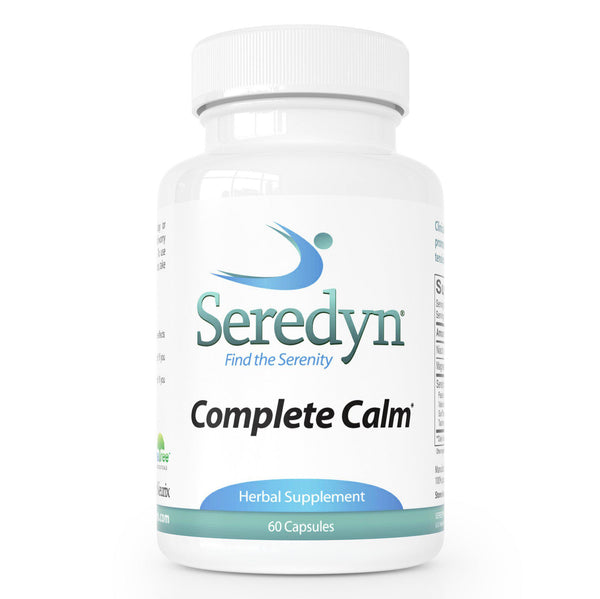
Valerian root is the dried root of Valeriana officinalis, a tall plant with small pink or white flowers. People use it as an herbal sleep aid and a calming dietary supplement. A long history and a handful of active compounds explain its place in calming formulas.
Valerian grows wild in Europe and parts of Asia. Physicians in ancient Greece and Rome, including Hippocrates and Galen, wrote about it. Centuries later, people in England reportedly used it to cope with the stress of World War II air raids.
Germany's Commission E, a government panel whose reports the American Botanical Council later published in English, approved valerianfor restlessness and sleep problems.⁷ Today it's sold as valerian capsules, tablets, tinctures, and valerian tea.
Valerian root contains valerenic acid, volatile oils, and small amounts of amino acids. Its strong smell comes from isovaleric acid, a close cousin of valeric acid, which takes its name from the plant. Scientists think these compounds likely work together.
Valerenic acid appears to act on the neurotransmitter GABA (gamma-aminobutyric acid), a brain messenger tied to relaxation. In lab tests, valerian extract and valerenic acid also act as partial agonists at some serotonin receptors, so they switch those receptors on only partway. That in vitro activity came from cells in a dish, so the exact mechanism in people is still unclear.

Clinical studies haven't shown that valerian root causes heart attacks. In short-term studies, healthy adults reported mostly mild side effects. The bigger unknowns involve long-term use and people who already have heart disease.
The most common adverse effects in clinical trials are headache, dizziness, gastrointestinal disturbances like upset stomach, and morning grogginess. Heart attack doesn't appear among the side effects listed by the National Institutes of Health (NIH) Office of Dietary Supplements or the National Center for Complementary and Integrative Health (NCCIH).³
Most of these trials studied healthy volunteers. That makes the results reassuring for healthy adults, but less helpful for people with heart problems.
Most valerian trials lasted only a few weeks and rarely included people with heart conditions. No proof of harm is different from proven safety, especially for someone who already has heart disease.
Reported heart side effects are rare and mostly involve heart rhythm, one well-known case, and open questions about blood pressure. None of these reports show that valerian causes heart attacks.
High doses of valerian root may change heart rate. Some people describe this as palpitations, a racing or fluttering heartbeat, and the Merck Manual lists heart disturbances among valerian's possible adverse effects.
Stop taking valerian and call a doctor if your heart races, pounds, or flutters. A racing heart at night can have many causes, so it's worth getting checked.
A 1998 case report in the Journal of the American Medical Association (JAMA) described a man with heart disease who had taken high doses of valerian for years.¹ After he stopped suddenly around the time of surgery, he developed heart complications and confusion.
One case can't prove valerian caused the problem, since other health issues may have played a role. It does show why long-term users should taper off with a doctor's help.
Human research on valerian and blood pressure is thin. Valerian shouldn't replace any prescribed blood pressure treatment, and anyone with blood pressure concerns should talk with a doctor before taking valerian.
Research on valerian is mixed for both sleep and anxiety. Scientists have studied the scientific basis for valerian's reputed activity for decades, including in a well-known 1999 review, yet clinical studies still disagree.²
A 2020 systematic review and meta-analysis in the Journal of Evidence-Based Integrative Medicine examined valerian root for treating sleep problems and related disorders.⁵ The authors found valerian may improve sleep quality, though product quality and doses varied widely between trials.
Other studies found little change in sleep latency, the time it takes to fall asleep. That mixed picture is why experts still disagree about how well valerian works.
In a 2011 double-blind, placebo-controlled trial, menopausal women with insomnia took valerian capsules or a dummy pill for four weeks.⁶ Women taking valerian had better sleep quality scores, and the researchers reported a significant difference between the valerian and placebo groups.
The trial had a small sample size of about 100 women. One study like this can't settle the question, so larger trials are still needed.
A 2024 review of 8 systematic reviews covering 15,716 people found no evidence that valerian improves insomnia when sleep is measured objectively.⁸ Objective measures track sleep with equipment, often in a sleep lab.
The American Academy of Sleep Medicine (AASM) also recommends against valerian for chronic insomnia. Valerian may support relaxation, but it isn't a proven treatment for any sleep disorder.
Animal studies point to possible anxiolytic effects, which means anti-anxiety effects. In one study, rats given a valerian extract characterized by high valerenic acid levels showed anxiolytic activity.
Animal doses are based on body weight and are often far higher than what people take. Human studies on whether valerian can reduce anxiety or stress have mixed results, so the answer is still unclear.
Valerian extract (root) is one of the ingredients in Seredyn. Take a closer look at the full formula, then ask your doctor or pharmacist how it fits with your medicines and health needs.
Review the Seredyn FormulaPeople with heart conditions, liver disease, upcoming surgery, or sedating prescriptions should talk to a doctor before taking valerian. Short-term use appears low risk for most healthy adults, but these groups face more unknowns.
This group includes anyone with heart disease, heart rhythm problems, or a past heart attack. Research in these groups is limited, so a doctor can weigh the risks against other options.
Valerian may add to drowsiness from alcohol, benzodiazepines, other sleep aids, and some antihistamines. Its effects with heart and blood pressure medications haven't been well studied.
Lab research also suggests valerian may affect a liver enzyme that breaks down many other medications.⁴ If you also take St. John's wort or other herbal medicines, the mix gets harder to predict, so bring every bottle to a pharmacist before you start.
Rare reports have linked valerian products to liver injury, though many of those cases involved blends with other herbs. People with liver disease should skip valerian unless a doctor approves it.
Valerian may add to the effects of anesthesia, so tell your surgeon if you take it. Long-term users may need to taper off with medical guidance instead of stopping suddenly.

Using valerian extract safely starts with the label dose and a clear plan for how long you'll take it. A little caution goes a long way with any calming herb, from the label dose to the drink in the glass.
Start with a low dose and stick to the label amount. Higher doses are tied to more side effects, including palpitations and next-day fog.
Alcohol and other sleep aids add to valerian's sedative effect. Skip driving after a dose until you know how valerian affects you.
Most studies lasted only a few weeks, so long-term safety is unclear. Check in with a doctor if you plan to use valerian for more than a few weeks, and pair it with better sleep habits.
Heart attack warning signs include chest discomfort, pain in the upper body, and trouble breathing. Call 911 right away if any of these symptoms show up, even if you think a supplement is to blame:
Chest pain, pressure, squeezing, or fullness that lasts more than a few minutes or goes away and comes back
Pain or discomfort in one or both arms, the back, neck, jaw, or stomach
Shortness of breath, with or without chest discomfort
Cold sweat, nausea, or lightheadedness
Women are more likely to feel shortness of breath, nausea, and back or jaw pain. Never drive yourself to the hospital, and read more about how stress affects heart health.
Commercial valerian root extracts can vary widely in strength and quality. A 2004 lab study by Canadian researchers found that commercial valerian products varied in how strongly they affected that same liver enzyme. Herbal products also vary in valerenic acid content, so a quality label usually shows:
A standardized extract with a stated amount of valerenic acid
Exact amounts for every ingredient, instead of a vague "proprietary blend"
Third-party testing seals from groups such as United States Pharmacopeia (USP) or NSF International
Clear directions, warnings, and drug interaction details
Manufacturing that follows the Food and Drug Administration's (FDA) current good manufacturing practices (cGMP)
Every dietary supplement maker must follow cGMP rules, so treat that claim as the bare minimum. You can also compare different forms of valerian before you buy.
Clinical studies haven't linked valerian root to heart attacks, and heart side effects are rare. Still, people with heart conditions, liver disease, upcoming surgery, or sedating medications need a doctor's input first. Bring the bottle, or a photo of the label, to your next doctor or pharmacist visit and ask one question: "Is this safe with my heart and my medicines?"
BioNeurix lists every Seredyn ingredient, side effect, and drug interaction online, and its customer care team can answer product questions through the company website. Reaching out before starting a new supplement can help you make a more informed decision about your health.
Seredyn includes valerian extract (root) in its formula. If your doctor or pharmacist agrees it is suitable for you, review the label and choose a purchase option that fits your wellness routine.
Shop Seredyn Complete CalmSome people report a racing or fluttering heartbeat, often at higher doses, so stop taking valerian and call a doctor if it happens.
Human research on valerian and blood pressure is limited and unclear, so anyone with blood pressure concerns should talk with a doctor before using it.
This combination hasn't been well studied, so ask a doctor or pharmacist first, especially if your medicine already causes dizziness or drowsiness.
Short-term nightly use for a few weeks is generally well tolerated in healthy adults, but long-term nightly use hasn't been well studied.
Pregnant or breastfeeding women, children under 3, people with liver disease, and anyone taking sedatives should avoid valerian unless a doctor approves.
Garges, H. P., Varia, I., & Doraiswamy, P. M. (1998). Cardiac complications and delirium associated with valerian root withdrawal. JAMA, 280(18), 1566–1567. https://doi.org/10.1001/jama.280.18.1566-a
Houghton, P. J. (1999). The scientific basis for the reputed activity of valerian. Journal of Pharmacy and Pharmacology, 51(5), 505–512. https://doi.org/10.1211/0022357991772772
National Center for Complementary and Integrative Health. (2024, August). Cardiovascular disease and complementary health approaches. https://www.nccih.nih.gov/health/cardiovascular-disease-and-complementary-health-approaches
National Institute of Diabetes and Digestive and Kidney Diseases. (2020, April 5). Valerian. In LiverTox: Clinical and research information on drug-induced liver injury. National Institutes of Health. https://www.ncbi.nlm.nih.gov/books/NBK548255/
Shinjyo, N., Waddell, G., & Green, J. (2020). Valerian root in treating sleep problems and associated disorders: A systematic review and meta-analysis. Journal of Evidence-Based Integrative Medicine, 25. https://doi.org/10.1177/2515690X20967323
Taavoni, S., Ekbatani, N., Kashaniyan, M., & Haghani, H. (2011). Effect of valerian on sleep quality in postmenopausal women: A randomized placebo-controlled clinical trial. Menopause, 18(9), 951–955. https://doi.org/10.1097/gme.0b013e31820e9acf
The Complete German Commission E Monographs: Therapeutic Guide to Herbal Medicines. (1999). American Botanical Council. https://www.herbalgram.org/resources/commission-e-monographs/monograph-approved-herbs/valerian-root/
Valente, V., Machado, D., Jorge, S., Drake, C. L., & Marques, D. R. (2024). Does valerian work for insomnia? An umbrella review of the evidence. European Neuropsychopharmacology, 82, 6–28. https://doi.org/10.1016/j.euroneuro.2024.01.008