Your Cart is Empty


Valerian root tincture takes seconds to swallow, but its calm can take longer to arrive. Take it too late, and the drowsy feeling may show up after you've given up on sleep. Take too much too late, and it can follow you into the morning.
Most labels suggest taking it 30 minutes to 2 hours before bed, and the effects usually fade within a few hours. BioNeurix® uses valerian root extract in Seredyn, a calming formula, so we dug into the research. Once you know how fast valerian works and how long it lingers, planning a calmer evening gets easier.
Seredyn contains valerian extract (root) in a capsule formula. Review its ingredients, directions, and precautions as you compare options for your calm routine.
View Seredyn Product Details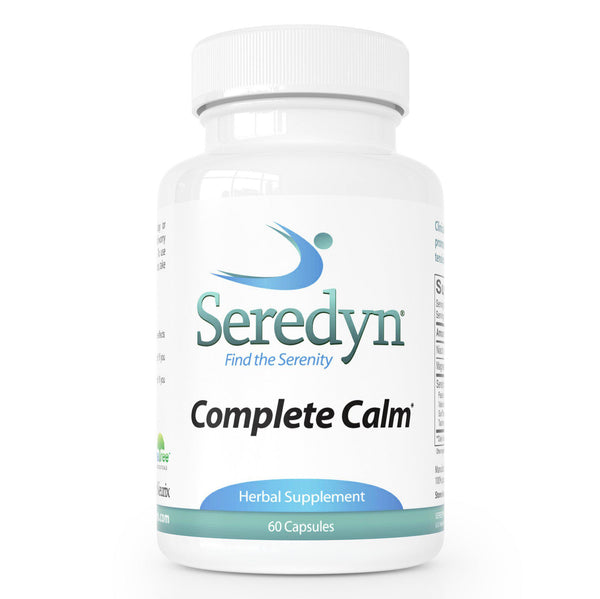
A valerian root tincture is a concentrated liquid made from the dried roots of Valeriana officinalis, a flowering plant native to Europe and parts of Asia. People have used valerian as a natural remedy for occasional sleeplessness since ancient Greece. It has stayed popular for centuries, and most tinctures today come in small dropper bottles.
A tincture is one type of valerian root extract. Makers soak chopped roots in alcohol or another liquid for days or weeks, then strain out the plant material. Labels often show strength as a ratio, such as 1:5, which means one part herb to five parts liquid.
A tincture is usually more concentrated than valerian tea. People commonly mix the drops into water or juice to mask valerian's strong odor. Unlike food, a tincture adds no meaningful nutrients. It delivers concentrated plant compounds instead, such as valerenic acid.
Most valerian tinctures use alcohol because it pulls more compounds out of the roots than water does. Each dose holds only a small amount of alcohol, but that still matters for anyone who avoids it completely.
Glycerin-based tinctures are alcohol-free and taste sweeter. They may also be less concentrated, so check the herb-to-liquid ratio on the label before comparing products.

Valerian tincture usually takes 30 minutes to 2 hours to kick in. That window is why most labels suggest taking it well before bed. As with many calming supplements, some changes take longer.
Many people describe a calm, slightly drowsy feeling that makes it easier to relax. Others notice very little at first.
Research suggests valerenic acid works through gamma-aminobutyric acid (GABA), a brain chemical that helps calm the nervous system. Lab work and animal testing support this idea.⁴ Benzodiazepines, a type of prescription sedative, also act on GABA, but valerian's effect appears far milder.
In one study from 2005, six healthy adults took a single 600-milligram (mg) dose of valerian extract by mouth.¹ Blood levels of valerenic acid peaked about 1 to 2 hours later.
That's a very small study, and the participants didn't take a tincture, so treat these numbers as a rough guide. Still, the timing lines up with the 30-minute to 2-hour window on most labels.
Studies suggest valerian's effects on sleep become clearer after 2 to 4 weeks of nightly use.A 2020 systematic review and meta-analysis, which pooled results from many trials, found valerian may help people feel more rested, but not all studies agree.²
A 2024 review of eight earlier reviews found no evidence that valerian improves objective measures of insomnia.³ Objective measures track sleep with equipment, like in a sleep lab. Valerian isn't an approved treatment and can't treat insomnia, so trouble sleeping that lasts more than a few weeks deserves a doctor's visit.
Other potential health benefits also seem to need time. In one 8-week study, women in menopause who took valerian reported milder, less frequent hot flashes than women who took a placebo, or dummy pill.
That result is promising, but one small trial can't prove valerian will reduce hot flashes for everyone. More research is needed before anyone knows how well it works or how long it takes.
As you weigh tinctures and capsules, take a closer look at Seredyn's valerian extract (root) and other ingredients. Review the complete formula with your doctor or pharmacist before choosing.
Review the Seredyn FormulaValerian's effects usually last a few hours, and the body clears most of it within about 5 hours. That short window suits a night of sleep. The calm doesn't always clock out on time, though.
Half-life is the time it takes for the level of a substance in your blood to drop by half. In the same 2005 study, valerenic acid had a half-life of roughly 1 to 2 hours. Levels were still measurable for up to about 5 hours.
That makes valerian fairly short-acting compared with some prescription sleep medications. If you take it at a normal bedtime, most of it is gone by morning.
The calming effect usually fades within several hours, which fits a normal night of sleep. Some people also take valerian during the day for stress or general relaxation, but daytime doses can cause drowsiness at work or behind the wheel.
Research on anxiety symptoms is limited and mixed. Anyone dealing with ongoing anxiety should talk with a healthcare professional instead of relying on herbs alone.
Some people say they feel more sluggish the morning after taking valerian, particularly at higher doses. Studies using usual doses have found little next-day impairment. If mornings feel heavy, a lower dose or an earlier time may help.
Other minor side effects can occur too. Headache, dizziness, and upset stomach are the most common symptoms people report.
Dose, product strength, food, and your own body all change how fast valerian works. A few factors shape the timing most:
Dose and strength: A 1:5 tincture is weaker than a 1:2 tincture, so the same number of drops can deliver very different amounts.
Food: Taking it right after a large meal may slow absorption.
Product quality: Plants vary by nature, so the amount of valerenic acid differs from brand to brand. Herbal supplements are sold as dietary supplements in the United States, and the Food and Drug Administration (FDA) doesn't test product strength before sale.
Consistency: Nightly use may matter more than any single dose.
Your body: Size, metabolism, and sensitivity to herbs all play a part.

A tincture may act slightly sooner than capsules or tablets, but no study has compared valerian forms head-to-head. Any difference is likely small. Product strength and timing usually matter more than the form you choose.
Liquids skip the step where a capsule breaks down in the stomach, so absorption may start a little sooner. Many labels also suggest holding the drops under the tongue.
Little research shows this speeds up valerian's effects, though. The bitter taste also makes it hard for some people to hold the drops for long.
Capsules and tablets with standardized valerian extract deliver the same measured amount every time. Drop size changes with the dropper and how you hold it, so tincture doses are harder to repeat exactly.
Many calming formulas pair valerian with passionflower or other herbs, and that combination can feel different from valerian alone. For a side-by-side look, see how teas, capsules, and tinctures compare.
The best time for taking valerian root is usually 30 minutes to 2 hours before bed. That timing lets it work right when you want to fall asleep. A steady routine and a few safety habits matter just as much.
Start near the 2-hour mark if mornings feel foggy, since an earlier dose has more time to wear off. Move closer to bedtime if the calm fades before your head hits the pillow.
Taking valerian at the same time each night makes it easier to see how it affects you. A consistent bedtime is also one of the core habits that support restful sleep, with or without herbs.
Alcohol can add to valerian's drowsy effect, so skip drinks on nights you take it. Don't drive or use machinery after a dose until you know how valerian affects your body.
A few groups should avoid valerian tincture or get a healthcare professional's okay before using it. The National Institutes of Health (NIH) says valerian is generally safe for healthy adults over short periods, but these people need extra care:
Pregnant or breastfeeding women
Children under 3
Anyone taking sedatives, benzodiazepines, blood pressure medications, or other prescriptions
People who avoid alcohol, since most tinctures contain it
Anyone with liver problems, given rare reports of liver injury
Anyone with surgery coming up
Heavy, long-term users should taper off with a doctor's help instead of stopping suddenly. Valerian also isn't proven for lowering blood pressure, so it shouldn't replace prescribed care.
Valerian root tincture usually kicks in within 30 minutes to 2 hours, and its effects fade within a few hours. Dose, product strength, and your own body can shift that window. Take it at the same time nightly for two weeks, and note when the calm starts and how your mornings feel. Check with a doctor first if you take medications, and remember that no herb replaces a healthy diet and steady sleep habits.
Prefer capsules? Seredyn uses valerian extract, and its side effects and drug interactions are listed online. Two weeks of notes will tell you more than any label can.
Seredyn includes valerian extract (root). If your healthcare provider agrees the full formula fits your needs, review the label and choose a purchase option for your wellness routine.
Shop Seredyn Complete CalmValerian root usually kicks in within 30 minutes to 2 hours, though changes in overall sleep quality may take a few weeks of nightly use.
Small studies put valerian's half-life at about 1 to 2 hours, and most of it leaves the body within several hours.
Some people feel sluggish the next morning, especially at higher doses, so a lower dose or an earlier time may help.
Many labels suggest it, but little research shows it works faster than mixing the drops into water or juice.
Short-term nightly use appears safe for most healthy adults, but long-term safety isn't well studied, so ask a doctor before using it for more than a few weeks.
Anderson, G. D., Elmer, G. W., Kantor, E. D., Templeton, I. E., & Vitiello, M. V. (2005). Pharmacokinetics of valerenic acid after administration of valerian in healthy subjects. Phytotherapy Research, 19(9), 801–803. https://doi.org/10.1002/ptr.1742
Shinjyo, N., Waddell, G., & Green, J. (2020). Valerian root in treating sleep problems and associated disorders: A systematic review and meta-analysis. Journal of Evidence-Based Integrative Medicine, 25. https://doi.org/10.1177/2515690X20967323
Valente, V., Machado, D., Jorge, S., Drake, C. L., & Marques, D. R. (2024). Does valerian work for insomnia? An umbrella review of the evidence. European Neuropsychopharmacology, 82, 6–28. https://doi.org/10.1016/j.euroneuro.2024.01.008
Yuan, C. S., Mehendale, S., Xiao, Y., Aung, H. H., Xie, J. T., & Ang-Lee, M. K. (2004). The gamma-aminobutyric acidergic effects of valerian and valerenic acid on rat brainstem neuronal activity. Anesthesia & Analgesia, 98(2), 353–358. https://doi.org/10.1213/01.ANE.0000096189.70405.A5