Your Cart is Empty


Stress, low mood, and poor sleep often co-occur, which is one reason many people look into saffron mood support. Most people know saffron as a spice used in cooking, but saffron extract has also been studied as a dietary supplement for mood regulation, sleep quality, and emotional balance. The research is promising, especially in small clinical trials, but it is still developing. It helps to think of saffron supplementation as one possible part of a broader mental health routine, not as a quick fix or a replacement for medical care.
If you are exploring natural ways to support emotional balance, a well-formulated mood supplement may be a helpful next step alongside healthy habits, sleep, and stress management.
See Amoryn Mood Booster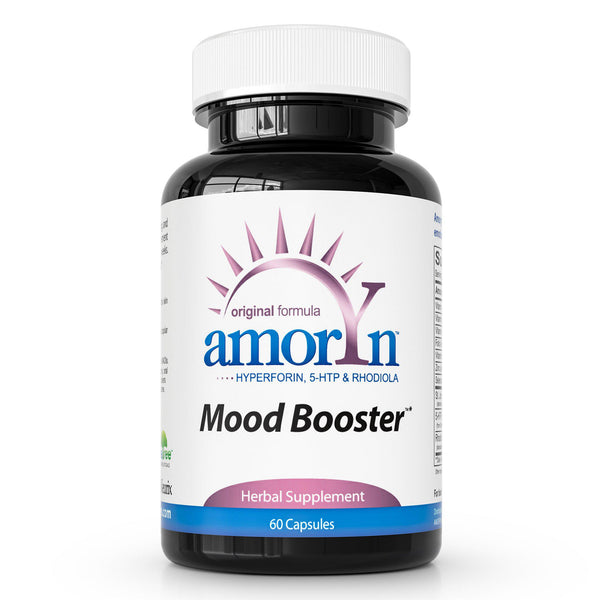
Saffron comes from the bright red threads of the Crocus sativus flower. It has a long history of culinary and traditional use, and modern clinical research is exploring whether a high-quality saffron extract may support mood regulation, stress response, sleep quality, and brain health. Current evidence suggests potential benefits, but it does not prove that saffron can treat or prevent mood disorders.
Saffron contains active constituents, including crocin, crocetin, and safranal³. Researchers are studying how these compounds may support antioxidant defense, mood regulation, and brain health. Early findings are encouraging, but the exact mechanisms remain under study, so claims about antidepressant effects should remain measured and evidence-based.
Multiple mood pathways: May support neurotransmitters, stress response, sleep, and inflammation.
Serotonin support: Studied for possible effects on serotonin signaling¹.
Dopamine support: May also influence pathways tied to motivation and mood.
Not the same as Selective Serotonin Reuptake Inhibitors (SSRIs): Should not be described as working like prescription antidepressants.
Stress response support: May help support a healthier response to everyday stress.
Emotional balance: May support a calmer and more balanced mood.
Stress resilience: May help the body adapt to stress over time.
Anti-inflammatory activity: Has shown anti-inflammatory properties in research.
Brain health relevance: These effects may also relate to cognitive function and brain health.
Complex inflammation link: Mood and inflammation are connected in complex ways.
Most proposed mechanisms are still being studied, and researchers have not fully confirmed exactly how saffron supports mood in the brain. Current findings are promising, but more research is needed to better understand its full effects.

"Overall evidence looks promising."
Research suggests saffron supplementation may support mood, emotional well-being, sleep quality, and stress response in some groups.
"The evidence still has limits."
Many studies use small sample sizes, short study periods, and different saffron extract formulations, which makes results harder to compare.
"Some studies report support for depressive symptoms."
Several randomized controlled trials and placebo-controlled studies have reported improvement in depressive symptoms², including in some adults with mild to moderate depression.
"It should not be framed as a replacement for standard care."
Even when short-term studies show comparable efficacy to certain antidepressant medications, saffron is better described as a supportive or adjunctive option.
"Research on stress and anxiety is encouraging, but cautious wording matters."
Some clinical studies suggest saffron may support calm mood regulation, emotional balance, and stress response, but claims like “quick relief” go beyond the evidence.
"Saffron has been studied for mood-related symptoms during the menstrual cycle."
Some studies suggest it may support emotional well-being in people with premenstrual symptoms, including symptoms linked to PMS and PMDD.
"Menopause-related mood support is still early-stage."
Early research has explored saffron for menopausal symptoms, mood, sleep quality, and sexual function, but the findings are not strong enough to support treatment claims.
"The safest summary is measured and supportive."
Current research suggests saffron may offer mood support in certain settings, but stronger studies are still needed before firmer conclusions can be made.
Poor sleep and low mood often go hand in hand. Some studies suggest that saffron may support sleep quality and emotional balance within the same timeframe, contributing to growing interest in its mood-supporting properties.
Rather than saying saffron can tackle both problems at once or reliably lower evening cortisol, it is safer to say saffron may support relaxation and sleep quality for some people. Good sleep habits still matter and likely shape the result.
As you build a more consistent routine for stress, sleep, and emotional wellness, adding a targeted supplement can help round out your daily plan with practical support.
Check Out the FormulaDo not expect overnight results. In many clinical studies, participants used saffron supplementation for several weeks before meaningful changes in mood regulation, stress response, or sleep quality were measured. Two to four weeks is a reasonable general range to mention, but it should not be presented as a guarantee.
Consistency matters in most supplement routines, but claims about the brain requiring a steady supply to adjust its chemistry go too far. A safer approach is to use saffron extract regularly, when appropriate, as it is in clinical trials.
For the best results, pay attention to how much you take. Most experts recommend a specific range to safely manage your mood.
Many clinical studies on saffron mood support have used about 28-30 milligrams of saffron extract per day. That makes the range useful to mention, but it should not be called the best dose for everyone. The right amount can vary by product, the level of extract standardization, and individual health factors.
The threads you see in the grocery store are raw saffron (Crocus sativus) parts used for cooking. A novel saffron extract is different in concentration and consistency. Supplements used in clinical trials are usually standardized extracts, which makes dosing easier to study. Cooking with saffron can still fit into a healthy routine, but food use is not equivalent to the saffron supplementation used in most mood studies.
You have to read the labels carefully. Look for standardized extracts that clearly list the exact amount of active ingredients. Good brands also pay for independent testing to prove products are clean. If a bottle hides ingredients behind vague blends, put it back on the shelf.
See how saffron fits within the Amoryn formula to understand how carefully selected ingredients are combined for mood support.
For most healthy adults, saffron is generally well tolerated in culinary amounts and in the doses used in many short-term studies. Still, safety depends on dose, health status, medication use, and product quality. A few specific groups need to pay closer attention before starting a new routine.
Pregnant women should speak with a healthcare provider before using saffron supplements. People taking blood thinners, antidepressant medication, or other prescription drugs should also ask a clinician about possible interactions. Anyone with a history of bipolar disorder, major depression, or other mood disorders should not self-manage symptoms with supplements alone. If high blood pressure or another medical condition is present, a clinician should guide use.
Side effects are generally rare and mild. You might get a slight stomach ache, a quick headache, or feel a bit dizzy when you first start. These adverse events usually fade as your body gets used to the supplement. If you feel sick or notice an allergic reaction, stop taking it and call your doctor.
Researchers are also studying saffron for broader brain health, including cognitive function and mild cognitive impairment. That research is interesting, but it does not yet justify saying saffron shields brain cells from aging or increases brain-derived neurotrophic factor in a proven clinical way.
Some clinical research has explored the use of saffron in adults with mild cognitive impairment and other brain health concerns. These findings suggest potential cognitive benefits, but the evidence is still emerging. It is safer to say saffron may support cognitive function in some settings than to say it defends brain cells from long-term damage.
We still have a lot to learn. Many current clinical studies rely on small groups of people over short periods of time. Every batch of raw saffron stigma is slightly different, which can make comparisons harder. A recent meta-analysis also suggests future trials need larger groups and clearer inclusion criteria. While a placebo-controlled trial can offer useful insights, more research is still needed before stronger conclusions can be drawn.

Throwing a pill back whenever you remember is not a great strategy. You want to tie your supplement to an existing daily habit so you stay consistent.
Try taking your dose with breakfast. Having food in your stomach may help lower the chance of mild nausea. Drink a full glass of water and get some sunlight in your eyes right after. This simple morning habit can help build consistency and support a steadier tone for the day.
If stress keeps you awake, take your capsule an hour before bed. Pair it with reading a book or doing some light stretching. Keep your bedroom cool and dark. Combining the supplement with good sleep habits can help you get more from the routine.
You cannot out-supplement a terrible lifestyle. Saffron works best when you give your body the basic building blocks it needs to function well.
Try eating balanced meals and getting enough magnesium through food⁴ when possible. Steady meals can help support energy and mood regulation across the day. Regular movement, including resistance training, can also support mental health. Remember that dietary supplements can support, but they do not replace sleep, nutrition, movement, or medical care when needed.
Explore Amoryn mood‑support information to see how nutrition and lifestyle work alongside saffron for overall emotional wellness.
Saffron shows promise as a mood-support ingredient, particularly in research on stress, sleep quality, depressive symptoms, and emotional balance. Still, the evidence is not definitive, and no single randomized, double-blind, placebo-controlled study proves that saffron will work for everyone. A high-quality saffron supplement may fit into a broader wellness plan, but it is best framed as supportive, not curative.
If you want a convenient way to support a calmer, steadier day, explore a product designed to fit easily into your long-term wellness routine.
Shop Amoryn NowSome clinical trials suggest saffron extract may support mood and help reduce depressive symptoms in certain adults, but the evidence is still developing, and results vary.
Many studies recommend 28 to 30 milligrams of saffron extract daily, but that does not make a single dose right for everyone. Product quality and personal health factors matter.
Some studies report changes after several weeks of consistent use, often around two to four weeks. Timing can vary from person to person.
Talk with a healthcare professional before combining saffron with prescription antidepressant medication or selective serotonin reuptake inhibitors. Even natural supplements can interact with medications.
Some research suggests saffron may support both mood and sleep quality in some people. It should not be presented as a guaranteed result.
Lopresti, A. L., & Drummond, P. D. (2014). Saffron (Crocus sativus) for depression: A systematic review of clinical studies and examination of underlying antidepressant mechanisms of action. Human Psychopharmacology: Clinical and Experimental, 29(6), 517–527. https://doi.org/10.1002/hup.2434
Mahmoudi, R., Mohammadi-Sartang, M., Servatyari, K., & Rafieipour, N. (2026). Effect of saffron on depression, anxiety and mood disorder: A GRADE assessed systematic review and meta-analysis of 34 randomized controlled trials. Nutrition Neuroscience. Advance online publication. https://doi.org/10.1080/1028415X.2025.2602153
Matraszek-Gawron, R., Chwil, M., Terlecki, K., & Skoczylas, M. M. (2023). Current knowledge of the antidepressant activity of chemical compounds from Crocus sativus L. Pharmaceuticals, 16(1), Article 58. https://doi.org/10.3390/ph16010058
Tarleton, E. K., Littenberg, B., MacLean, C. D., Kennedy, A. G., & Daley, C. (2017). Role of magnesium supplementation in the treatment of depression: A randomized clinical trial. PLOS ONE, 12(6), e0180067. https://doi.org/10.1371/journal.pone.0180067