Your Cart is Empty


Take the right supplement at the wrong hour, and you might trade better sleep for a restless night. When you swallow mood-boosting supplements can matter almost as much as which ones you pick, since some energize and others calm. Get the timing right, and a supplement fits smoothly into your day. Get it wrong, and you could feel wired at bedtime or groggy at your desk.
Matching each ingredient to morning or night, with a quick safety check, is the simplest way to get more from what you take.
Amoryn® Mood Booster offers a convenient formula for people looking to support a positive mood, emotional balance, and everyday well-being.
View Amoryn® Mood Booster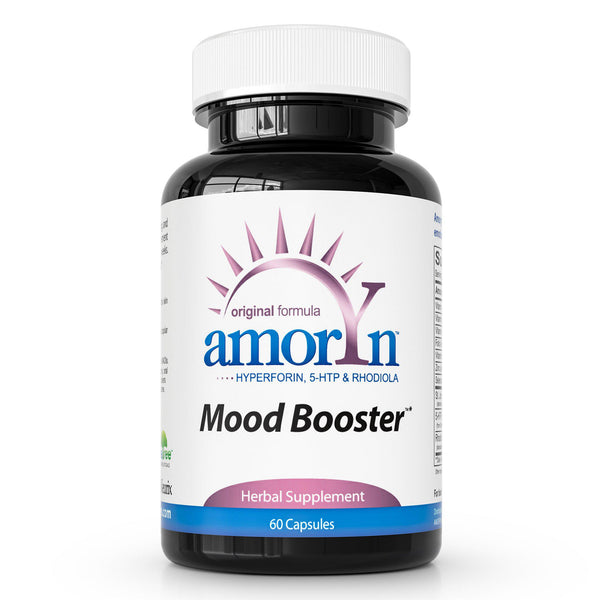
Mood-boosting supplements are nutrients and herbs taken to support a positive mood and steadier emotions. They are dietary supplements, not medicine, so they support the body rather than treat a condition. Most work by feeding the brain chemistry behind mood and calm.
These products blend natural vitamins, minerals, amino acids, and herbs to support mood. Common examples include B vitamins, vitamin D, magnesium, and L-theanine, as well as botanicals such as ginkgo biloba and green tea extract. Each supports brain function and neurotransmitters like serotonin and dopamine to some extent, which is why timing and dose matter for emotional well-being.
Morning dosing is better for supplements that lift energy and sharpen focus. Taking them early lines up with the hours you need to think and move. Anything stimulating belongs at the start of the day, not the end.
Energizing supplements⁴ work best in the morning because they support daytime drive. B vitamins fuel energy metabolism, and botanicals like ginseng or ginkgo biloba extract may support alertness and cognitive function. Save these for early hours, since taking them late can leave you too keyed up to sleep.
Night dosing is better for supplements that calm the body and support sleep. Evening is when relaxation helps most, letting the nervous system wind down. Calming ingredients taken at night can improve sleep and recovery.
Calming supplements are well-suited for the evening because they promote relaxation. Magnesium eases muscle tension, and herbs with a long history of traditional use, like lemon balm and valerian, help quiet a busy mind. Taking these at night supports deeper sleep instead of fighting your daytime focus.

Several ingredients work best early because they support energy, focus, and daytime mood. Morning use lets them do their job while you are active. Consider these ingredients for daytime use and why they fit morning routines:
B-complex vitamins for energy metabolism
Vitamin D with breakfast, since fat aids absorption
Omega-3s for daytime cognitive support and steadier mood
Ginseng for a morning sense of vitality
Pairing these with breakfast makes them easy to remember and gentler on the stomach.
A handful of ingredients are best at night because they support calm and sleep. Evening use turns their drowsy side to their advantage. These are the ones to move to your nightstand.
Magnesium is well suited to the evening¹ because it supports relaxation. This mineral calms the nervous system and can ease the tension that builds during a stressful job or long day. A dose at night may also help improve sleep quality.
Lemon balm is well-suited to the evening² thanks to its gentle calming effect. This herb has a long history of use to ease stress and settle the mind before bed. It pairs naturally with a wind-down routine.
Valerian is best at night because it leans strongly toward sleep. The herb can cause drowsiness, which is helpful before bed but risky before driving or at work. Starting it in the evening lets you see how the body responds.
Instead of managing several separate products, review the Amoryn® formula and see how it may fit alongside your morning or evening routine.
See Product DetailsSome ingredients work better in the morning or at night, depending on your goal and how your body reacts. Flexibility makes these easy to fit into a daily routine. The trick is matching the dose to the effect you want.
L-theanine works well at either end of the day. This amino acid, found in green tea, supports calm focus in the morning and a relaxed mind at night, all without causing drowsiness. Where you place it depends on whether you want daytime focus or evening calm.
Probiotics can be taken in the morning or at night, as long as you stay consistent. These live microorganisms support gut health, which research increasingly links to mood and brain function. Many people take them with a meal to help the bacteria survive.
Ashwagandha suits either time, based on the effect you are after. This adaptogen helps the body handle stress, so a morning dose may steady daytime nerves while an evening dose can support rest. Some people even split the dose to cover both.

Food changes how well the body absorbs a supplement and how gentle it feels. Some ingredients need a meal, while others upset an empty stomach. A little planning cuts down on side effects.
Fat-soluble vitamins are absorbed best when taken with a fat-containing food. Vitamin D and omega-3s are prime examples, since a little fat helps them be absorbed by the body. Breakfast with eggs or avocado works nicely.
Minerals like magnesium are gentler when taken with food or split into smaller doses. A large dose on an empty stomach can cause stomach pain or loose stools. Spreading it out eases these possible side effects.
Energizing herbs and extracts sit better when taken with a meal. Ginseng and ginkgo can cause mild headaches or nausea on an empty stomach for some people. Food softens the effect and improves comfort.
Effects appear anywhere from under an hour to several weeks, depending on the ingredient. Some options calm you fast, while others build slowly. Knowing the timeline keeps expectations fair.
Fast-acting calming agents can be felt in 30 to 60 minutes. L-theanine and lemon balm are good examples that ease tension soon after a dose. The effect is mild and short-lived.
Nutrients and adaptogens usually need days to weeks to show benefits. Magnesium, B vitamins, and vitamin D build up as the body corrects low levels, while ashwagandha often takes 3 to 8 weeks.³ Clinical studies on adaptogens tend to run over several weeks for this reason.
A trial period of a few weeks helps you judge any supplement fairly. Bodies differ, so what works for a friend may feel different for you. More research is still needed to fill gaps, since some of these effects are not fully understood.

A few safety checks come before any new supplement, regardless of timing. Screening lowers the risk of a bad reaction. Three checks cover most concerns.
Check for interactions before mixing supplements with certain medications. St. John’s wort is a major example, since it interacts with many prescription drugs, including antidepressants, birth control, and blood thinners. Ginkgo can also thin the blood, so anyone taking medications should ask a doctor first.
Pregnant or breastfeeding people should clear any supplement with a doctor first. Many herbs are not proven safe during these stages, and some may affect the baby. A provider can point toward gentler ways to support mood.
People with certain health conditions need extra care when taking certain supplements. Issues affecting the liver, heart, or a diagnosed mental health condition change what is safe, and supplements are not built to treat mental disorders or depression. A doctor can help match choices to your health.
The best way to start is one supplement, a low dose, and a simple log. This approach shows what works and when. A little structure early saves confusion later.
Add one supplement at a time so its effect is clear. Starting several at once hides which one helped or caused a problem. Give each option a couple of weeks before adding another.
Begin at the lowest useful dose and build only if needed. Higher amounts raise the odds of side effects without adding benefits. Follow the label and adjust slowly.
Note the time you take each supplement, as well as your mood, sleep, and energy. A short log reveals whether you suit morning or night better. Patterns in focus, calm, or fatigue show up within a few weeks.
Daily habits shape mood far more than timing alone, and they make supplements work better. The strongest results come when a supplement supports a solid routine. Pair supplements with foundational habits for best mood support:
A consistent sleep schedule
Balanced whole-food meals
Regular physical activity
Daily stress-management practices like breathwork or mindfulness
Good sleep, real food, and movement stabilize the brain chemistry that supports a balanced mood. Supplements add support on top of that base, not in place of it.
The best time to take mood-boosting supplements depends on how each ingredient works, your routine, and safety checks. Keep energizing options like B vitamins and ginseng in the morning, and move calming ones like magnesium, lemon balm, and valerian to the evening.
Flexible picks like L-theanine and ashwagandha fit wherever you need focus or calm. Start with one supplement, use a low dose, track your response, and screen for interactions with any medications before you begin.
Build a timing plan that fits your life, lean on trusted guidance from Bioneurix and a doctor, and take one steady step toward better mood support today.
Check the Amoryn® ingredients, serving directions, and product details before adding it to a consistent wellness routine.
Shop Amoryn® Mood BoosterMagnesium is usually best taken at night, since it supports relaxation and can improve sleep quality.
Yes, adaptogens like ashwagandha can be taken daily at either time, with morning for daytime calm and night for rest.
Fat-soluble vitamins like vitamin D and omega-3s absorb best with food, while calming amino acids like L-theanine work either way.
Give most mood supplements a few weeks, since nutrients and adaptogens need days to weeks to show benefits.
Calming supplements taken in the morning may cause daytime drowsiness, so save them for night and keep energizing ones for the day.
Arab, A., Rafie, N., Amani, R., & Shirani, F. (2023). The Role of Magnesium in Sleep Health: a Systematic Review of Available Literature. Biological trace element research, 201(1), 121–128. https://doi.org/10.1007/s12011-022-03162-1
Mathews, I. M., Eastwood, J., Lamport, D. J., Cozannet, R. L., Fanca-Berthon, P., & Williams, C. M. (2024). Clinical Efficacy and Tolerability of Lemon Balm (Melissa officinalis L.) in Psychological Well-Being: A Review. Nutrients, 16(20), 3545. https://doi.org/10.3390/nu16203545
Mikulska, P., Malinowska, M., Ignacyk, M., Szustowski, P., Nowak, J., Pesta, K., Szeląg, M., Szklanny, D., Judasz, E., Kaczmarek, G., Ejiohuo, O. P., Paczkowska-Walendowska, M., Gościniak, A., & Cielecka-Piontek, J. (2023). Ashwagandha (Withania somnifera)-Current Research on the Health-Promoting Activities: A Narrative Review. Pharmaceutics, 15(4), 1057. https://doi.org/10.3390/pharmaceutics15041057
Tardy, A. L., Pouteau, E., Marquez, D., Yilmaz, C., & Scholey, A. (2020). Vitamins and Minerals for Energy, Fatigue and Cognition: A Narrative Review of the Biochemical and Clinical Evidence. Nutrients, 12(1), 228. https://doi.org/10.3390/nu12010228