Your Cart is Empty


A pill that flips your mood from low to bright sounds like an easy fix, but real life rarely works that way. The phrase “happy pill” gets tossed around for anything that lifts mood, from prescription antidepressants to over-the-counter supplements.
Natural options can support calm, focus, and a steadier mood, yet they are not a magic switch and not a replacement for medical care. Used with care, some can be a helpful part of a bigger plan. What follows breaks down the honest options, how fast they work, and when to call a doctor instead.
Start your journey to a steadier mood with a balanced blend of researched ingredients designed to support calm and focus.
Learn More About Amoryn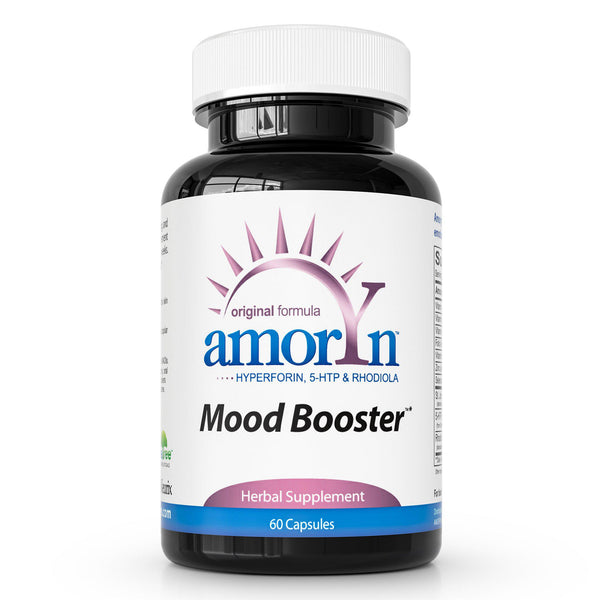
A “happy pill” is a casual nickname, not a real medical category. People use it to describe anything taken to lift mood or ease stress, which lumps together very different products. Sorting out what the phrase means is the first step to using anything safely.
The term covers both prescription drugs and natural supplements, even though they are worlds apart. On one side sit prescription medications like antidepressants and anti-anxiety medications, which a doctor prescribes to treat a diagnosed mental health condition.
On the other side sit dietary supplements, which are meant to support mood and calm, not to treat illness. Calling both a “happy pill” blurs a line that really matters for your health.
Natural options are not the same as prescription medications, and treating them as equal is risky. Supplements and prescription drugs face very different rules, and they work in different ways. Knowing the gap helps you set fair expectations.
Prescription drugs and supplements are held to different standards. Antidepressants go through years of research and testing before the government approves them to treat depression, and each dose is tightly controlled.
Supplements do not need that approval, so a maker can sell a product to support mood without proving it works the same way a medicine must. That is why supplements can only claim to support the body, never to cure or treat a mental health condition.
Several natural options are commonly used to support mood and promote calm, steady energy. None is a happy pill in the movie sense, but a few have decent research behind them. Consider these commonly used nonprescription ingredients and formats:
L-theanine (an amino acid for calm focus)
Ashwagandha (an adaptogen for stress support)
Lemon balm (an herbal extract for relaxation)
Magnesium (a mineral for nervous system support)
B-complex vitamins (nutrient support for energy and mood)
Omega-3 fatty acids, EPA (eicosapentaenoic acid) and DHA (docosahexaenoic acid), fats for brain health
Probiotics (support for the gut-brain connection)
Each supports the body differently, so the right pick depends on the goal.

The evidence behind these options ranges from solid to thin, depending on the ingredient. Some have real human studies, while others rest on early or small research. Judging quality keeps hope realistic.
Research strength varies widely from one ingredient to the next. L-theanine and ashwagandha have the most human studies, and both may help reduce stress and support a calmer, more balanced mood.
Magnesium and B vitamins matter most when the body runs low on them, since low levels can drag on mood and energy. Omega-3s and probiotics show promise for brain health and the gut-brain link, but the research is still growing, so treat bold claims with healthy doubt.
Some natural options work within hours, while others need weeks of steady use. Speed depends on how the ingredient acts in the body. Matching your expectations to the timeline saves frustration.
Fast-acting options can be felt in 30 to 60 minutes. L-theanine is the clearest example, easing tension and sharpening focus soon after a dose.² The effect is gentle and short-lived, more of a soft landing than a strong push.
Nutrients and adaptogens usually need days to weeks to show benefits. Magnesium and B vitamins build up as the body restocks what prolonged stress drained, while adaptogens like ashwagandha often take four to eight weeks to help the body adapt. Steady daily use matters far more than a single large dose.
Natural does not mean risk-free, so a few safety points matter before you start. Doses, interactions, and personal health all shape what is safe. A little caution prevents most problems.
Most options cause few side effects at normal doses, though some reactions are common. Magnesium can loosen stools, valerian and lemon balm can cause drowsiness, and some herbs may trigger mild nausea. Staying within label doses lowers these risks.
Supplements can interact with prescription medications¹ and change how they work. Calming herbs can enhance the effects of sedatives, and omega-3s may thin the blood. Anyone taking medications should have a doctor or pharmacist review new supplements first.
Some people need to skip these products or use them only under care. Pregnant or breastfeeding people, and anyone with a medical condition affecting the liver, heart, or thyroid, face higher risks. A doctor can help determine what is safe for a specific person.
Skip the guesswork. Amoryn combines trusted natural ingredients like B-vitamins and adaptogens to help you find your balance without a prescription.
Explore the FormulaThe safest way to start is slow, single, and tracked. One product at a time shows what actually works. A little structure early prevents guesswork later.
Start with a single product so you can judge its effect. Adding several at once hides which one helped or caused a reaction. Give each option a couple of weeks before deciding.
Begin at the lowest useful dose and raise it only if needed. More is not better, and higher amounts raise the odds of side effects. Follow the label and adjust slowly.
Keep a short daily note on mood, sleep, focus, and any symptoms. Small patterns reveal whether a supplement supports a brighter mood or has no effect. Honest tracking beats guessing every time.
A few pairings come up often because they balance calm, energy, and mood. The goal is gentle support, not a stronger hit. Common stacks and pairings often discussed include:
L-theanine plus caffeine for smoother, calmer focus
Magnesium at night for relaxation support
B-complex vitamins with omega-3s for overall mood support
These combinations are popular examples, though the best mix still depends on the individual and a doctor’s input.

Product quality comes down to independent testing and honest labels. Since supplements skip pre-market approval, outside proof matters. Three signals separate trustworthy products from the rest.
Third-party testing means an outside lab checks a product for purity and accuracy. Seals from labs like USP (United States Pharmacopeia) or NSF (National Sanitation Foundation) show a product met high standards. This step guards against contamination and doses that miss the label.
Clear labels list every ingredient and its exact dose. Skip products that hide amounts inside a “proprietary blend.” Open labels signal a brand willing to stand behind its formula.
A certificate of analysis (COA) is a lab report confirming what is inside. Reputable makers share one on request or post it online. A company that cannot provide one is a warning sign.
A clinician should be consulted whenever mood problems are more than mild or short-lived. Supplements are not built to handle real depression or anxiety on their own. Three situations call for a doctor.
See a doctor if low mood, deep sadness, or anxiety is new, severe, or getting worse. A lasting loss of interest in life, changes in eating or sleep, or trouble managing daily emotions can point to a condition that needs real treatment, sometimes therapy, sometimes medication. If you are struggling or losing hope, reaching out for help is a sign of strength, not weakness.
Talk with a doctor before adding supplements to any mental health prescription. Combining herbs with antidepressants or anti-anxiety medications can change how those drugs work, sometimes affecting serotonin levels. A quick review keeps the combination safe.
Consult a provider during pregnancy, breastfeeding, or any chronic illness. These situations change what counts as safe, and self-treating can backfire. Professional guidance is the surest path.

Daily habits do more for mood than any pill, and they make supplements work better. The strongest results come when a supplement supports a solid routine instead of propping up a shaky one. Pair supplements with foundational habits for best results:
A regular sleep schedule
A balanced whole-food diet
Daily physical activity, such as a brisk walk
Stress-management practices like breathwork or mindfulness
Exercise, real food, and good sleep shape brain chemistry in ways that support a steadier mood. Leaning on friends and staying connected helps too. Supplements simply add a little extra support on top.
A nonprescription “happy pill” is really a mix of habits and gentle support, not a single cure. Options like L-theanine, magnesium, and ashwagandha may support calm and a more balanced mood, and they work best alongside good sleep, movement, and a healthy diet. Start with one product, use the lowest effective dose, track how the body responds, and choose third-party tested brands. Most importantly, loop in a doctor when mood symptoms are strong, lasting, or paired with prescription medications.
Take one careful, informed step toward feeling steadier, and lean on real guidance from Bioneurix and a trusted clinician along the way.
Make mood support a simple part of your daily routine. Try Amoryn® Mood Booster and take a steady step toward feeling your best today.
Shop Amoryn NowGentle options like L-theanine, magnesium, or a B-complex may support mood and calm, but see a doctor if low mood lasts or worsens.
Yes, some herbs can affect serotonin or change how antidepressants work, so consult a doctor before combining them.
Fast options like L-theanine work in 30 to 60 minutes, while magnesium and adaptogens take days to several weeks.
Adaptogens like ashwagandha are considered safe for most adults short term, though long-term data is limited, so check with a doctor.
Look for seals from independent labs such as USP, NSF, or ConsumerLab that confirm a supplement’s purity and quality.
Changaramkumarath, G., Abucha, J. M., Wollel, M. M., Somannagari, N., Kasagga, A., Sapkota, A., & Malasevskaia, I. A. (2025). Pharmacological Interactions Between Nutritional Supplements and Prescription Medications in Older Adults: A Comprehensive Review. Cureus, 17(9), e92363. https://doi.org/10.7759/cureus.92363
Gerolymos, C., Saddier, E., Boyer, L., & Fond, G. (2026). Cognitive and affective effects of L-Theanine: a systematic review and meta-analysis of 31 randomized trials. Molecular psychiatry, 10.1038/s41380-026-03727-9. Advance online publication. https://doi.org/10.1038/s41380-026-03727-9