Your Cart is Empty


Reaching for coffee and a calming pill on the same morning is more common than most people think. Caffeine wakes up the body and sharpens focus, while anxiety and stress-relief supplements aim to do the opposite, calming the nervous system and easing tension.
Pair them carelessly, and you can feel wired, jittery, or oddly flat. Pair them wisely, and the two can actually work together. Smart timing, low doses, and a quick interaction check are what keep the combination safe and useful.
Review Seredyn® Complete Calm’s ingredients and directions before deciding how it fits alongside your caffeine routine.
Explore Seredyn® Complete Calm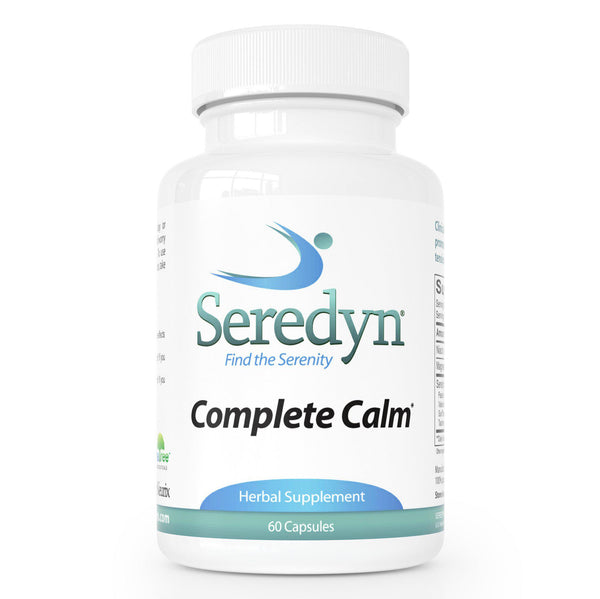
Caffeine can change how supplements work¹ by stimulating the nervous system and shifting alertness. It speeds up brain and body signals, which can either clash with or complement a supplement’s calming effect. Three factors explain most of the interaction.
Caffeine can strengthen the stimulating side of some supplements. Certain herbal supplement blends contain energizing compounds, and stacking them on top of coffee may raise the heart rate and feed anxious thoughts. More stimulation is not the goal when the aim is to reduce stress.
Caffeine can affect when and how the body absorbs a supplement. It speeds digestion for some people, which may change how quickly an amino acid like L-theanine or a mineral is absorbed. Spacing doses apart helps each one do its job.
Caffeine can hide the early effects of a calming supplement. A strong cup of coffee may cover up the gentle relaxation that magnesium or lemon balm brings, making a product feel like it is not working. Judging benefits is easier once caffeine wears off.

Some supplements interact with caffeine more than others, and the effect depends on whether the ingredient is calming or stimulating. Calming agents tend to balance caffeine, while sedating herbs can pull against it. Here is how the main groups behave.
L-theanine pairs well with caffeine and smooths out the jitters. This amino acid, found in tea, promotes a calm, focused state and takes the edge off coffee’s buzz. The two are often combined on purpose for steady focus without the crash.
Adaptogens like ashwagandha extract react to caffeine in mixed ways. These herbs help the body adapt to daily stress and support a balanced mood, but pairing a heavy dose of caffeine with an adaptogen can blur the calming effect. Spacing them out usually works better.
Sedative herbs and caffeine work against each other,² which wastes both. Valerian root and higher doses of lemon balm are intended to promote relaxation and improve sleep, so drinking coffee at the same time can cancel out much of the benefit. Save these herbs for the evening.
It is safe to take supplements with caffeine when timing and dose are planned. The right spacing lowers the chance of clashing effects and makes results clearer. A few simple rules cover most situations.
Keep stimulating and sedating products at opposite ends of the day. Caffeine and calming herbs are at cross-purposes, so taking a sedative herb hours after your last coffee helps avoid a tug-of-war in the body. This spacing protects both sleep and focus.
Time each supplement to the effect you want. Choose focus-friendly options like L-theanine near your coffee, and save relaxation support, such as magnesium glycinate, for later in the day. Matching timing to purpose is a small habit with a real payoff.
Begin with the lowest useful dose of any new supplement. Adding a full dose on top of a high caffeine intake increases the risk of side effects. Small amounts let you gauge how the body responds before scaling up.
Use the Seredyn® Complete Calm product page to compare ingredients, serving directions, and timing before pairing it with caffeine or other supplements.
Review Product DetailsA few caffeine-and-supplement pairings come up again and again because they balance energy with calm. The goal is smoother focus, not more stimulation. Commonly discussed combinations include:
L-theanine with coffee for smoother, calmer focus
Low-dose magnesium later in the day for relaxation support
Avoiding sedative herbs right after high caffeine intake
The L-theanine and coffee pairing is the most popular, since many supplements are formulated to blend the two for steady attention.
How long to wait after taking a caffeine supplement depends on the type of supplement. Fast-acting calming agents can be taken near coffee, while sedatives take effect hours later. Matching the gap to the ingredient keeps effects clean.
Short-acting calming agents can be taken within 30 to 60 minutes of caffeine. L-theanine is the clearest fit, since it softens coffee’s jitters almost right away. No long wait is needed for this pairing.
Nutrients such as magnesium, B vitamins, and vitamin D are flexible on timing. These dietary supplements build up in the body over days, so a cup of coffee nearby rarely matters. Consistency across the week counts more than the exact hour.
Sedative herbs are best taken in the evening, well after caffeine clears. Valerian root and lemon balm can leave you drowsy, which suits winding down but not a workday. Several hours of spacing protects both their calming effect and your sleep.

Caffeine can make some supplement side effects worse, especially for sensitive people. Its stimulating pull can sharpen the very symptoms you are trying to ease. Watching for three reactions helps you adjust early.
Too much caffeine can raise anxiety levels³ and crowd out a supplement’s calm. Coffee stacked on a busy, stressful day may spark anxious thoughts or even feelings close to panic attacks in sensitive people. Cutting back on caffeine often helps more than adding another pill.
Late caffeine can undo the effects of a supplement meant to improve sleep. Even an afternoon cup can keep the nervous system alert into the night. Pairing a calming evening herb with a late coffee sends the body two opposing signals.
Caffeine can speed up the heart,⁴ and some ingredients can add to that effect. People with high blood pressure or a heart condition may notice a racing pulse or a fluttering sensation. Anyone with these symptoms should ease off caffeine and check in with a doctor.
Some people should avoid mixing caffeine with stress supplements or do so only with professional guidance. Certain conditions and medications raise the risk. Extra care protects those most likely to react.
Anyone with a heart or blood pressure condition should be cautious. Caffeine can lift heart rate and blood pressure, and adding certain compounds may compound that effect. A doctor can advise what is safe for a specific medical condition.
People taking stimulant or sedative prescription drugs need to screen the combination first. Caffeine can amplify stimulant medications, while calming herbs can deepen the effect of sedatives. Interactions with prescription medications are a real concern worth a professional review.
Pregnant or breastfeeding people should limit caffeine and skip most stress supplements. Many herbs are not proven safe during pregnancy, and high caffeine carries its own cautions. A doctor can point toward safer ways to handle daily stressors.

The safest start is one supplement, careful notes, and a professional check. This approach shows what works and flags problems fast. A little structure early prevents guesswork later.
Add one new supplement at a time so the effect is clear. Starting several at once makes it hard to know what helped or caused a reaction. Give each option a couple of weeks before adding the next.
Write down your caffeine, supplements, sleep, and mood each day. A short log turns vague impressions into real patterns. Over a few weeks, you can see what supports a positive outlook and what backfires.
Talk with a doctor before combining caffeine with many supplements, especially when taking medications. Providers trained in integrative medicine can suggest a holistic approach that fits your health. Professional guidance is the surest way to stay safe.
Daily habits play a crucial role in how well caffeine and supplements sit together. The best results come when both support a healthy routine rather than prop up a shaky one. Pair supplement use with:
A consistent sleep schedule
Balanced meals, including foods like chia seeds, to steady blood sugar
Regular movement or stress-management practices
Limiting late-day caffeine to protect sleep
These habits support brain health, steady mood regulation, and emotional balance, which lets any supplement work from a stronger base.
Caffeine and anxiety and stress relief supplements can share a routine when timing, dose, and interactions are handled with care. Keep stimulating and calming products apart, start every new supplement low and slow, and track how the body responds over a few weeks. Watch for jitters, sleep trouble, or a racing heart, and pause to consult a doctor if symptoms build or you take prescription medications. Choose third-party-tested products and let good sleep, real food, and movement carry most of the load.
Pair your coffee and calm with intention, lean on trusted guidance, and take one smart step toward steady focus with Bioneurix today.
Explore Seredyn® Complete Calm and introduce any new supplement thoughtfully, with careful timing and professional guidance when needed.
Shop Seredyn® Complete CalmYes, L-theanine is often paired with coffee because its calming effect can smooth out caffeine’s jitters while keeping focus.
A large dose of caffeine may blunt the calming effect of ashwagandha extract, so spacing them out a few hours works better.
Sedative herbs like valerian root are best taken in the evening, several hours after caffeine, to protect their calming effect and improve sleep.
Mixing caffeine with magnesium citrate, magnesium glycinate, or B vitamins is low risk for most adults, since the timing of these nutrients is flexible.
People on antidepressants that affect serotonin should consult a doctor before adding caffeine and supplements, since interactions and side effects are possible.
Fiani, B., Zhu, L., Musch, B. L., Briceno, S., Andel, R., Sadeq, N., & Ansari, A. Z. (2021). The Neurophysiology of Caffeine as a Central Nervous System Stimulant and the Resultant Effects on Cognitive Function. Cureus, 13(5), e15032. https://doi.org/10.7759/cureus.15032
Islam, M. T., Al Hasan, M., Ferdous, J., & others. (2025). Caffeine and sclareol take the edge off the sedative effects of linalool, possibly through the GABAA interaction pathway: Molecular insights through in vivo and in silico studies. Naunyn-Schmiedeberg’s Archives of Pharmacology, 398(8), 10997–11009. https://doi.org/10.1007/s00210-025-03915-4
Liu, C., Wang, L., Zhang, C., Hu, Z., Tang, J., Xue, J., & Lu, W. (2024). Caffeine intake and anxiety: a meta-analysis. Frontiers in psychology, 15, 1270246. https://doi.org/10.3389/fpsyg.2024.1270246
Marcus, G. M., Hu, F. B., van Dam, R. M., Cornelis, M. C., Dewland, T. A., Kang, J., Larsson, S. C., Page, R. L., 2nd, Parekh, N., & American Heart Association Council on Lifestyle and Cardiometabolic Health; Council on Clinical Cardiology; and Stroke Council (2026). Caffeine and Cardiovascular Disease: A Scientific Statement From the American Heart Association. Circulation, 10.1161/CIR.0000000000001454. Advance online publication. https://doi.org/10.1161/CIR.0000000000001454