Your Cart is Empty


A happy event arrives, but the excitement never does. Sad news lands, but tears feel far away. You go through the motions while others see you functioning normally. Emotional numbness is a period when feelings seem quieter, flatter, or much harder to reach than expected. Overwhelming stress can trigger this reaction as a coping mechanism.
Feeling numb does not automatically mean you do not care about your own life. It simply indicates the nervous system needs support. Recognizing this emotional numbing helps uncover the underlying cause and regain a sense of emotional balance.
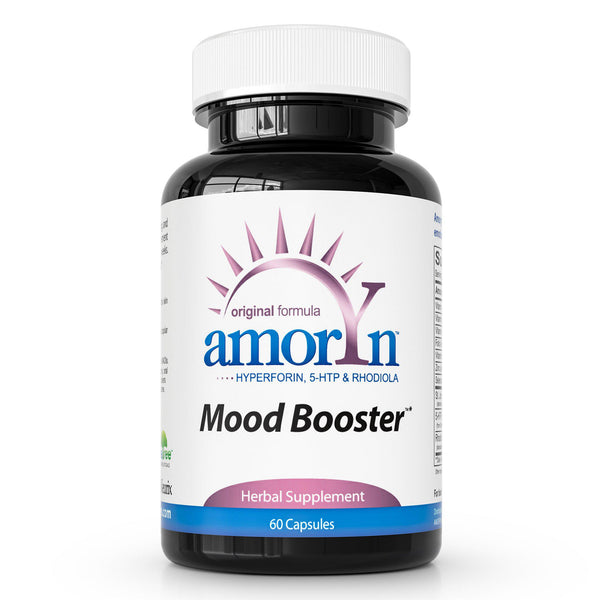
Feeling flat or disconnected? Amoryn Mood Booster is formulated with targeted nutrients to help you gently restore emotional well-being and rediscover your brighter days.
Emotional numbness feels like living life completely emotionally flat, distant, or empty. Recent psychological research defines this state as a marked reduction or complete absence of internal emotional experiences.³ Rather than feeling like an active participant in your own life, you might feel entirely cut off from your feelings, struggling to process both positive and negative events.
According to clinical assessments of emotional numbing, you might notice that:
Joy feels muted: Happy moments feel much less exciting than expected, and there are certain positive emotions you feel you simply cannot experience.
Lack of shared reactions: In situations where other people have strong emotional responses, you do not feel anything at all.
Relationships feel distant: You have a hard time feeling close to people, leaving you feeling detached from even your closest friends and family.
Sadness is absent: Stressful or sad events bring little to no emotional reaction.
Interests fade: Hobbies or routines feel less meaningful as your internal emotional world narrows.
Life feels automatic: You move through the day on autopilot, struggling to name your feelings and defaulting to "fine."
Only negative feelings remain: Irritation, worry, or distress may be easier to access than joy or affection, as emotional numbing often masks a highly stressed or overloaded nervous system.

These mental health issues often overlap but are not the same thing. Understanding the differences helps in finding the right support system. Emotional numbness covers a broad range of muted feelings. Anhedonia centers specifically on losing interest and lost pleasure. These emotional experiences can mix and are best assessed by a mental health professional.
Recent neuroimaging research defines anhedonia as a broad deficit in the brain's reward processing networks.⁴ Meanwhile, the National Health Service (NHS) describes dissociation as a severe mental disconnect.
While emotional numbness and dissociation frequently overlap during times of prolonged stress, the two are distinct experiences. Numbness is a muted or distant emotional state. Dissociation involves a profound sense of being disconnected from yourself or the world around you, sometimes accompanied by changes in memory or your perception of reality.
There is no single reason for a lack of emotional responses. Knowing when the emotional blunting began provides useful context for identifying the root cause. A mental illness, past trauma, and certain physical factors can all play a role. Exploring these triggers helps you understand why positive emotions and negative feelings went quiet.
Depression can feel empty and flat rather than obviously sad. You might notice reduced interest and low energy, along with negative thoughts. You cannot diagnose depression based on numbness alone.
High and sustained tension can give way to deep mental exhaustion. This constant anxiety leaves you with a flat, disconnected feeling. The body essentially shuts down emotional experiences to manage stress and find temporary relief.
Loss of interest, isolation, and trouble feeling joy often follow a frightening traumatic event. The National Institute of Mental Health notes that post-traumatic stress disorder ptsd frequently involves feeling detached. Not everyone who experiences traumatic stress develops post‐traumatic stress disorder (PTSD).¹
Certain substances and medicines can dull how strongly you feel emotions. For example, the FDA notes that some antidepressants can cause a flat mood. (Note: Never stop or reduce a prescribed medicine without consulting a prescribing doctor.)
Beyond medication, other common contributors include a variety of daily pressures:
Ongoing stress: Emotional numbness may occur during long periods of severe strain.
Grief: Loss may bring shock and emptiness rather than constant crying.
Physical health: Conditions like thyroid problems or physical pain can affect the mind-body connection.
It is a common misconception that numbness equals apathy. Emotional numbness acts like someone simply turned down the volume on your own feelings. The emotions are not permanently gone. They are just temporarily harder to reach. A massive difference exists between what a person values and how strongly a person can express emotions at a given moment. You still care deeply about loved ones and living a meaningful life.
Broad emotional flatness and exhaustion can make a person feel detached from the people they love. Trouble communicating physical or emotional pain often leads individuals to pull away. This withdrawal happens because explaining the emptiness feels too exhausting. This dynamic does not automatically mean the relationship is failing. Try saying something simple to a partner to maintain connection. You might say, "I care about you, even though I am having trouble connecting with my own emotions right now." This keeps social interactions honest.
Prolonged stress and anxiety can drain your emotional reserves, leaving you feeling numb. Support a healthy nervous system and a brighter outlook with our daily mood-lifting supplement.
Start by noticing small reactions instead of trying to force intense feelings. Taking gentle steps helps safely restore your mind-body connection, providing a steady foundation for emotional numbness to slowly fade. Here are a few ways to begin:
Notice feelings without judging them: Pause and ask what feels different right now.
Ground yourself through your body: Feel your feet on the floor and practice deep breathing.
Watch for small moments of comfort: Notice the warm sunlight or smile at a pet to invite small moments of joy.
Avoid constant distraction: Steering away from every negative thought acts as a protective shield but ultimately keeps you disconnected.
Support basic self-care: Getting seven or more hours of good-quality sleep and engaging in physical activity help lower stress hormones, including cortisol.
Consider professional help: Talk therapy, acceptance and commitment therapy (ACT),² or other treatment options offer excellent tools for reconnection.

It is worth reaching out for professional support if emotional numbness keeps returning or makes daily life much harder. Consider seeking help when:
Daily life is impacted: A health professional can help if your relationships are suffering or if basic self-care feels impossible.
The numbness persists: The Cleveland Clinic recommends treating persistent emotional blunting as a reason to investigate potential medical causes.
The cause is unclear: A primary care clinician is a great starting point to help figure out what is going on.
You need specialized mental health support: You can work closely with a therapist to explore other potential mental health conditions, such as borderline personality disorder or depersonalization-derealization disorder.
You feel unsafe: Call or text 988 for the Suicide and Crisis Lifeline, or call your local emergency services in an immediate crisis.
Emotional numbness has many possible causes, but it never means you are uncaring or broken. Small moments of awareness serve as a strong starting point for healing. Encourage yourself to notice small signals, join a support group, and ask for support when needed.
Ignoring your mental and physical health can leave you feeling even more disconnected from the world around you. By taking proactive steps to care for your mind and body, you can slowly restore your emotional balance. Explore BioNeurix to discover daily wellness habits and targeted nutritional support designed to help you gently reconnect and feel more like yourself again.
Don't let emotional numbness keep you distant from the moments that matter. Add Amoryn Mood Booster to your daily self-care routine and start feeling more like yourself again.
There is no single timeline because it completely depends on the underlying cause.
You can slowly restore feelings through gradual awareness, body connection, supportive routines, trusted people, and finding the root cause.
Outward circumstances do not always reveal hidden stress, mood shifts, medication side effects, or internal health factors.
It can occur alongside depression but is never enough to diagnose a mental illness on its own.
Some experiences naturally shift over time, but persistent numbness or other symptoms are always worth discussing with a health professional.
Bryant R. A. (2019). Post-traumatic stress disorder: a state-of-the-art review of evidence and challenges. World psychiatry : official journal of the World Psychiatric Association (WPA), 18(3), 259–269. https://doi.org/10.1002/wps.20656
Hayes, S. C., Luoma, J. B., Bond, F. W., Masuda, A., & Lillis, J. (2006). Acceptance and commitment therapy: model, processes and outcomes. Behaviour research and therapy, 44(1), 1–25. https://doi.org/10.1016/j.brat.2005.06.006
Li, G., Hampel, A., et al. (2023). Emotional numbing: A key construct in the assessment of mental health during COVID-19 pandemic. Advance online publication. https://doi.org/10.1177/18344909231217649
Liu, C., Song, Y., Zhao, X., Wang, Z., Yan, L., Yu, Y., & Zhu, J. (2026). Brain network localization of anhedonia. PMID: 41912491. https://doi.org/10.1038/s41398-026-04005-6