Your Cart is Empty


The day finally slows down. You sit, close your eyes, and your heart starts racing. If that sounds familiar, learning how to relax takes more than closing your eyes and waiting for calm.
The pattern has a name: relaxation-induced anxiety. Researchers first described it in 1983, after some people felt more tense during relaxation techniques meant to help them.²
Calm sits at the heart of BioNeurix®, and this guide is for anyone who finds rest harder than it should be. The answer starts with small steps that help your body get used to calm.
If relaxing feels harder than it should, you aren't alone. Ease into rest with Seredyn Complete Calm, designed to naturally support relaxation when your mind races.
Discover Seredyn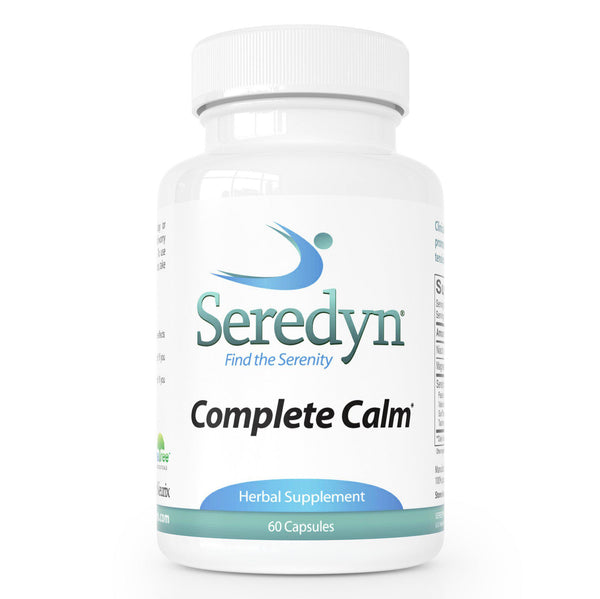
Relaxation-induced anxiety is a rise in worry, tension, or racing thoughts that shows up right when you try to unwind. It's a recognized pattern, not a personal failure, and it can happen during breathing exercises, meditation, or progressive muscle relaxation.
Researchers describe it as a spike in anxiety, muscle tension, or anxious thoughts during an attempt to relax. Some people notice intrusive thoughts or a pounding heart the moment the room goes quiet. It isn't a diagnosis on its own, though it often shows up in people with anxiety disorders such as generalized anxiety disorder or panic disorder.
In the original 1983 study of 14 adults with general tension, 30.8% felt more tense during progressive relaxation, and 53.8% did during mantra meditation. A 1988 study of 30 chronically anxious people found that 17% reported increased anxiety during a session.¹ Both samples were small, so treat these numbers as a starting point.
Larger reviews point the same way. A 2020 systematic review of 83 meditation studies found unwanted effects in about 8% of participants, with anxiety reported most often, sometimes in people with no history of mental health problems.⁷

For a busy, worried mind, slowing down can feel less like rest and more like lowering a shield. Research suggests a few likely reasons, and most come down to how the body responds after you've been feeling stressed for a long time.
Staying tense can feel safer than being caught off guard if calm suddenly turns to stress. In a 2019 Penn State study, people more sensitive to that kind of emotional shift reported more relaxation-induced anxiety. The stress response keeps stress hormones flowing, while its opposite, the relaxation response, slows the heart rate and can lower blood pressure, according to the National Center for Complementary and Integrative Health (NCCIH).⁶
When things go quiet, physical sensations like a heartbeat, a breath, or a tingle become easier to notice. Some people read these bodily sensations as danger. Shallow breathing or a racing pulse can then feed more worry.
Early research linked the pattern to a general fear of becoming anxious and a fear of losing control. Letting go of muscle tension or negative thoughts can feel like loosening a grip that kept you safe.
Safer ways to relax build calm in small, manageable doses instead of forcing it. The goal is to let your body get used to quiet one short session at a time.
Start with two to five minutes, eyes open and gaze resting on one spot. You can stop at any time, and stopping still counts as practice. You don't need to reach inner peace for a session to work, and researchers have discussed ways around this problem in therapy since 1984.⁵
Physical activity such as walking, stretching, gentle yoga, or gardening gives the mind something to do while the body settles. A slow loop around a local park works well. Programs like mindfulness-based stress reduction help many people, but in the 1983 study, open-ended mantra meditation triggered more relaxation-induced anxiety than structured muscle relaxation.
Try paying attention to sounds, textures, or the warmth of a mug instead of scanning inward. Keeping your attention on the present moment outside your body may feel easier than a body scan. Guided imagery, where you picture a calm place, works the same way for some people, though outward focus hasn't been studied as closely.

A few small physical moves can relax your body without asking the mind to go blank. Try one at a time, and stop if it feels worse:
Cyclic sighing: Take two inhales through the nose, then a long, slow exhale through the mouth. In a 2023 Stanford study, five minutes a day of this breath control exercise improved mood more than mindfulness meditation.³
Belly breathing: Diaphragmatic breathing, where the belly rises more than the chest, swaps shallow breathing for slow breaths. Box breathing adds breath holds, so skip it if holding your breath feels uneasy.
Jaw and face release: Let the jaw hang slightly open, soften the face muscles, and drop the shoulders away from the ears.
One muscle group at a time: Tense and release just the hands or feet instead of the entire body. It's a gentle way to practice progressive muscle relaxation and feel your muscles relax as you release tension.
Warmth: A warm shower, bath, or heating pad can ease tight muscles, and massage therapy is another route to physical relaxation.
A slow walk: Ten minutes outside keeps the body moving while it settles.
None of these will reduce stress instantly, and you may not feel relaxed the first time. If breathing techniques make you uneasy, switch to a move that doesn't focus on the breath. People with heart disease should check with a doctor before trying progressive muscle relaxation.
While you teach your body that calm is safe, give it the natural support it needs. Seredyn Complete Calm helps ease tension so you can settle in with less worry.
Enhance Your Routine
When anxiety spikes mid-session, a calm response in that moment can help your body learn that rest is safe. The spike doesn't mean the attempt failed.
Say a quiet phrase such as "This is just the shift from busy to still." Naming what's happening can take some of the surprise out of it.
Stay for a few more slow breaths or one deep breath if it feels manageable. If it doesn't, switch to movement, such as standing up to stretch. Both choices count as progress.
Park worries in a 15-minute "worry window" later in the day. Therapists often use this worry-postponement technique to help people manage stress without fighting every thought as it shows up.

The best way to relax is the one you'll come back to tomorrow. Different relaxation techniques suit different people, and for anyone prone to relaxation-induced anxiety, the right choice usually means starting small and building up.
In the Stanford breathing study, benefits grew as participants practiced on more consecutive days. A 2008 systematic review found relaxation training, including progressive relaxation and autogenic training, effective for reducing anxiety, with medium to large effects.² Researchers have also studied relaxation for chronic pain management and for helping to improve sleep, with more mixed results.
Pick one or two relaxation strategies and repeat them before adding other relaxation techniques. Steady, short practice does more for long-term well-being than one long session you dread.
If relaxing often brings strong anxiety or panic, a licensed mental health therapist can guide a gradual approach, in person or online. Relaxation skills are part of many psychological therapies, including cognitive behavioral therapy (CBT) and applied relaxation, a form of relaxation therapy used for generalized anxiety disorder. Some therapists also use biofeedback-assisted relaxation, which shows your heart rate or muscle tension on a screen.
NCCIH calls relaxation techniques generally safe for healthy people, but it notes rare reports that they can worsen symptoms in people with certain psychiatric conditions or a history of trauma. Stress management programs often include these skills, too. See a doctor about long-lasting symptoms, such as chronic insomnia or anxiety that won't ease.
Learning how to relax with relaxation-induced anxiety starts small, so try one two-minute, eyes-open session or one round of cyclic sighing today, then write down how it felt. Short, repeated practice helps your body learn that calm is safe, and that's how stress management techniques start to stick.
For extra support on tense days, BioNeurix® Seredyn® Complete Calm combines L-theanine, passionflower, and valerian to promote a calm, relaxed state during occasional stress, and it works best alongside the habits above, not in place of them. Valerian may cause drowsiness, so avoid driving until you know how Seredyn® affects you, and check with a healthcare provider first if you're pregnant, nursing, or taking any medication, especially sedatives. Two minutes is enough to begin.
These statements have not been evaluated by the Food and Drug Administration. This product is not intended to diagnose, treat, cure, or prevent any disease.
You have the tools to manage relaxation-induced anxiety. Now, support your daily practice with Seredyn Complete Calm and experience a gentler shift to stillness.
Start Your JourneySlowing down makes bodily sensations easier to notice and can feel like losing control, and some people stay tense to brace against a sudden shift back to stress.
It shows up most often in people who worry a lot, and small studies of tense or anxious adults found rates from about 17% to over 50%, depending on the method.
Slow breathing with a long exhale, such as cyclic sighing, is a simple form of deep breathing that can calm the body within minutes.
Short, regular sessions that slowly get longer help your body learn to feel calm without alarm.
Start small, choose active or structured methods, stop when you need to, and work with a licensed professional if stress and anxiety don't ease.
Braith, J. A., McCullough, J. P., & Bush, J. P. (1988). Relaxation-induced anxiety in a subclinical sample of chronically anxious subjects. Journal of Behavior Therapy and Experimental Psychiatry, 19(3), 193–198. https://doi.org/10.1016/0005-7916(88)90040-7 PubMed
Kim, H., & Newman, M. G. (2019). The paradox of relaxation training: Relaxation induced anxiety and mediation effects of negative contrast sensitivity in generalized anxiety disorder and major depressive disorder. Journal of Affective Disorders, 259, 271–278. https://doi.org/10.1016/j.jad.2019.08.045 PubMed
Leggett, H. (2023, February 9). ‘Cyclic sighing’ can help breathe away anxiety. Stanford Medicine. https://med.stanford.edu/news/insights/2023/02/cyclic-sighing-can-help-breathe-away-anxiety.html Stanford Medicine
Manzoni, G. M., Pagnini, F., Castelnuovo, G., & Molinari, E. (2008). Relaxation training for anxiety: A ten-years systematic review with meta-analysis. BMC Psychiatry, 8, Article 41. https://doi.org/10.1186/1471-244X-8-41 DOI
Milas, G., Martinović Klarić, I., Malnar, A., Saftić, V., Šupe-Domić, D., & Slavich, G. M. (2021). The impact of stress and coping strategies on life satisfaction in a national sample of adolescents: A structural equation modelling approach. Stress and Health, 37(5), 1026–1034. https://doi.org/10.1002/smi.3050 PubMed
National Center for Complementary and Integrative Health. (2022a, April). Stress. U.S. Department of Health and Human Services, National Institutes of Health. https://www.nccih.nih.gov/health/stress
National Center for Complementary and Integrative Health. (2022b, June). Meditation and mindfulness: Effectiveness and safety. U.S. Department of Health and Human Services, National Institutes of Health. https://www.nccih.nih.gov/health/meditation-and-mindfulness-effectiveness-and-safety0