Your Cart is Empty


Open your feed today, and you'll get whiplash. One creator tells you to quit your phone for 30 days to reset your brain. Scroll further, and the next one is about plating eggs and almonds while touting tyrosine and morning sunlight as natural ways to boost dopamine. They can't both be right for the same person.
The two pieces of advice solve opposite problems. A detox dials down the noise. A boost adds fuel when the brain has run short on the building blocks it needs to keep dopamine production steady.
If you're leaning toward the boost side, Amoryn Mood Booster uses standardized herbal extracts and vitamins that support the brain's natural feel-good pathways. The smarter move starts with figuring out what your body actually needs this week, not what's hot on TikTok.
If low motivation, flat mood, or mental fatigue feels more familiar than overstimulation, Amoryn Mood Booster may help support your daily mood routine with standardized herbal extracts and key vitamins.
Check Out Amoryn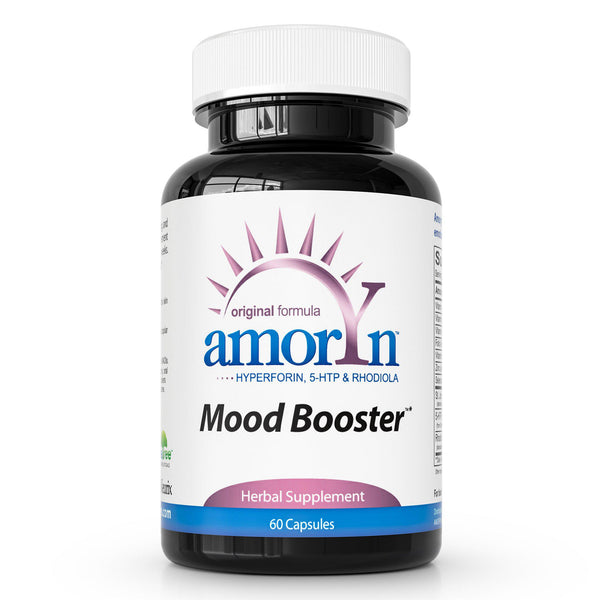
Dopamine is a neurotransmitter³ that drives motivation, reward, focus, and the ability to experience pleasure. Nerve cells release it across the brain's reward system,¹ and it touches everything from mood to cognitive function. Balance counts for more than chasing higher dopamine levels.
Dopamine is what nudges the human brain toward goals and rewards the effort once you get there. Finish a tough task, eat a good meal, hit a milestone at the gym, and the brain releases a small surge that tags the moment as worth repeating. That feedback loop is how habits form in the first place.
Steady dopamine activity quietly supports concentration, short-term memory, and the calm side of your mood. When dopamine regulation is working, focus comes without grinding through every task, and mental health feels more stable across the day. Healthy dopamine levels also tie into overall well-being in ways most people notice only when they slip.
Both ends of the spectrum cause trouble. Chronic low dopamine levels show up as flat mood, fatigue, and brain fog, and they're linked to conditions like attention deficit hyperactivity disorder (ADHD). At the other end, constant dopamine rushes from junk food, scrolling, or substance use can blunt the brain's response and push people toward risky behaviors over time.

A dopamine detox is a short, deliberate break from high-stimulation activities meant to reset how the brain responds to reward. The phrase took off on social media, and it's more pop science than clinical, since you can't literally drain dopamine out of your head. The core idea still has merit when applied to interrupt compulsive habits.
The detox usually starts with cutting the things that flood the brain with quick, cheap rewards. Common targets: social media, gaming, pornography, binge-watching, and ultra-processed junk food. The whole point is to step back from anything that hands you a dopamine rush with almost no real effort.
The goal is simple. You want everyday activities to feel rewarding again. Once the brain stops getting constant hits, slower pleasures like reading a paperback, taking a walk, or having a real conversation start to register again, and many people say a reset like this can help improve mood and focus as the brain settles back into a less noisy baseline.
Detoxes help the most when someone is stuck in compulsive screen loops. Late-night gaming, hours of short-form video, and reflexive social media use are the loudest signals. If your hand is on your phone before your brain knows why, this approach probably fits.
A dopamine reset can reduce noise, but daily support matters too. Amoryn Mood Booster combines vitamins and herbal extracts designed to support the brain’s natural feel-good pathways.
Support Your MoodBoosting dopamine naturally is about supporting the body's production and use of it, not forcing short spikes. The work happens in daily life through food, sleep, movement, and the way you handle stress. The wins are quieter, but they last longer.
The most effective natural ways to boost dopamine focus on supporting how the body produces and uses it, not just stimulating short spikes:
Morning sunlight within an hour of waking, which also helps with vitamin D and a steadier sleep cycle
Daily physical activity, especially walking and strength training, since regular exercise is one of the strongest ways to increase dopamine production
Foods high in tyrosine, like eggs, lean meats, almonds, avocados, and pumpkin seeds, give the brain the amino acid building blocks² it needs
Enough sleep on a consistent schedule, since sleep problems hit brain chemistry and mood hard
Cold exposure through brief cold showers, which can stimulate dopamine release
Listening to music you actually love, which lights up the brain's reward pathway
Small, achievable goals that trigger dopamine release through real wins instead of fake ones
Less time on quick-hit digital rewards that flatten the reward system
Targeted nutrients like L-tyrosine, vitamin B6, and Rhodiola, plus calming options like green tea
Stress-lowering habits, including deep breathing exercises, to reduce stress on the system
A detox removes overstimulation. A boost adds support when the brain is running on fumes. They sound like opposites, but they're really tools for different problems, and the right pick depends on what's driving the imbalance right now.
The detox works by cutting the steady drip of quick rewards that desensitize nerve cells⁵ over time. Heavy social media use, gaming, and ultra-processed foods can dull the brain's response to everyday pleasures, which is why everything starts to feel a little gray. Pulling back gives the reward system room to recalibrate.
The boost goes the other direction. When the body lacks the raw materials, enough sleep, or steady stimulation to keep dopamine activity stable, you end up with low dopamine and the symptoms that come with it. Adding the right foods, exercise, and nutrients gives the body what it needs to rebuild a healthy supply.
Honestly, most people need a bit of each. Trimming the empty inputs while shoring up daily habits gives the brain real room to rebalance, and the combination usually does more for mood, focus, and physical health than either move on its own. That mix, done consistently, is what good dopamine management actually looks like in daily life.

The right move depends on your symptoms and your week. A quick self-check makes it easier to see whether the issue is too much noise, not enough fuel, or both. Pick the description that sounds most like you and start there.
Use these signals to decide where to start:
Constant phone scrolling, a short attention span, or boredom with normal activities point to a detox
Low motivation, a flat mood, and trouble starting tasks point to a boost
Poor sleep and weak mornings point to a boost paired with better sleep habits
Compulsive gaming, binge-watching, or social media use point to a detox
Feeling numb even after rest and clean habits suggests nutritional support, including options like Amoryn Mood Booster, which pairs standardized herbal extracts with vitamins to support a steady mood
If symptoms are severe or persistent, talk with a healthcare provider before changing supplements or starting a new treatment plan, especially if you're on stimulant medications⁴ or dealing with other health conditions.
The real question isn't detox versus boost. It's what your brain needs more of this week. Most people get the best long-term results by trimming the empty stimuli and building stronger habits around sleep, regular exercise, and foods that feed natural dopamine production. Pick one change you can start tomorrow morning, whether that's a phone-free first hour or a 20-minute walk in the sun. For anyone working on the boost side, Amoryn Mood Booster is a natural option that supports daily work with standardized herbal extracts and key vitamins.
Small daily changes can add up. Pair better sleep, movement, and balanced habits with Amoryn Mood Booster for natural support that fits into everyday life.
Shop Amoryn Mood BoosterA dopamine detox can work as a reset for compulsive habits, though it doesn't literally lower dopamine levels in the human brain.
Many people notice gradual changes in mood and focus over several weeks of consistent sleep, regular exercise, and foods high in tyrosine, though results vary from person to person.
Yes, cutting quick-hit digital rewards while adding daily movement, sunlight, and tyrosine-rich foods is one of the most effective natural ways to support healthy dopamine levels.
Certain foods like eggs, lean meats, almonds, avocados, pumpkin seeds, and green tea give the brain the amino acid and nutrients it needs to support dopamine production.
Common signs of low dopamine include low motivation, a flat mood, poor focus, sleep problems, and trouble feeling pleasure from everyday activities.
Arias-Carrión, O., Stamelou, M., Murillo-Rodríguez, E., Menéndez-González, M., & Pöppel, E. (2010). Dopaminergic reward system: A short integrative review. International Archives of Medicine, 3, 24. https://doi.org/10.1186/1755-7682-3-24
Fernstrom, J. D., & Fernstrom, M. H. (2007). Tyrosine, phenylalanine, and catecholamine synthesis and function in the brain. The Journal of Nutrition, 137(6 Suppl 1), 1539S–1548S. https://doi.org/10.1093/jn/137.6.1539S
Hedges, E. C., Mehler, V. J., & Nishimura, A. L. (2016). The use of stem cells to model amyotrophic lateral sclerosis and frontotemporal dementia: From basic research to regenerative medicine. Stem Cells International, 2016, 9279516. https://doi.org/10.1155/2016/9279516
National Institute on Drug Abuse. (2011, October). Misuse of prescription drugs research report: Overview. National Institutes of Health, U.S. Department of Health and Human Services. https://nida.nih.gov/publications/research-reports/misuse-prescription-drugs/overview
Volkow, N. D., Wang, G. J., Telang, F., Fowler, J. S., Logan, J., Wong, C., Ma, J., Pradhan, K., Tomasi, D., Thanos, P. K., Ferré, S., & Jayne, M. (2008). Sleep deprivation decreases binding of [11C]raclopride to dopamine D2/D3 receptors in the human brain. The Journal of Neuroscience, 28(34), 8454–8461. https://doi.org/10.1523/JNEUROSCI.1443-08.2008