Your Cart is Empty


Standing in the supplement aisle, you stare down six magnesium bottles, six different forms, and not one clear sign of which helps you sleep. Most people grab the cheapest jar, take it for a week, and wonder why nothing changed. The issue is rarely magnesium itself. It comes down to the form, the dose, and the body's ability to absorb it. Picking the best magnesium supplements for sleep starts with understanding how magnesium may support a calmer nervous system and knowing which versions pass through mostly unchanged. Be sure to also review our [melatonin dosage guidance] to optimize your routine.
What follows sorts the forms that are worth your money from those that fall flat, shows how to read a label for real quality, and explains what to reach for when magnesium alone does not do the job.
The right magnesium can help you rest, but only when the form matches what is actually keeping you awake.
Mellodyn Sleep Easy combines melatonin with calming herbal extracts to support your natural sleep-wake cycle when mineral support alone may not be enough.
Explore Mellodyn Sleep Easy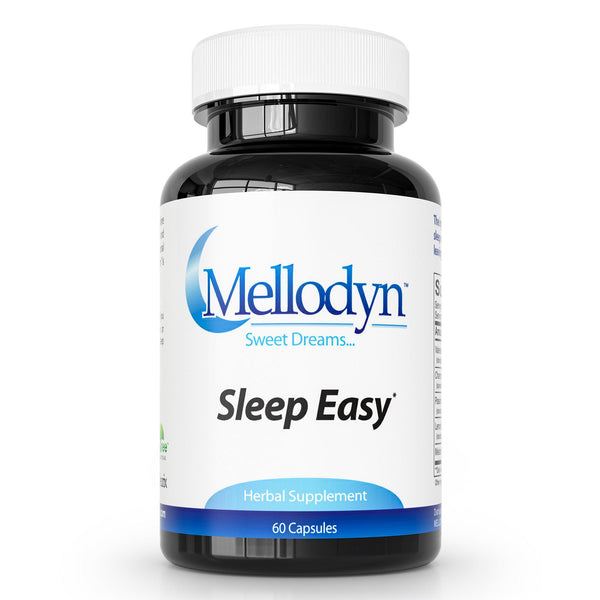
Magnesium matters for sleep because it helps quiet the nervous system and loosen tight muscles, both of which the body needs to wind down at night. When levels run low, sleep quality can slip, showing up as shorter sleep duration or more waking through the night. Magnesium plays a part in hundreds of processes inside the body, and a good number of them touch how well you sleep.
Magnesium helps settle the nervous system by supporting GABA (gamma-aminobutyric acid), the brain chemical that slows things down and signals it is time to ease off. When that signal works, the mental chatter quiets and sleep comes easier. That calming effect is a big reason the mineral shows up in so many sleep formulas.
Adequate magnesium helps muscles release tension rather than stay clenched, which supports normal muscle function. That kind of muscle relaxation supports easier rest, something many people notice when muscle cramps, muscle tension, or restless legs make it hard to settle at night. Calm muscles make it easier to drift off and stay down.
Many adults never reach the recommended daily magnesium intake. The target ranges from 310 to 420 mg, depending on age and sex,⁴ but diets low in magnesium-rich foods such as leafy greens, nuts, beans, and whole grains quickly fall short. Older adults slip below the line more than most, since the body absorbs less with age.

The best forms of magnesium for sleep are glycinate, threonate, and taurate, since they absorb well and pull toward relaxation rather than digestion. Not all magnesium is the same. What it is bound to, the form, decides how much your body actually takes in and where it goes to work.
Here are the forms of magnesium most often used for sleep support, ranked by general absorption and how well they fit relaxation:
Magnesium glycinate: highly absorbed, easy on the stomach, usually the first pick for sleep and calm
Magnesium threonate (magnesium L-threonate): studied for its ability to cross the blood-brain barrier,¹ with early research on cognitive and sleep support
Magnesium taurate: bound to the amino acid taurine, supports cardiovascular and nervous system function
Magnesium citrate: well absorbed, though higher doses can loosen things up
Magnesium chloride: well absorbed and gentle, found more often in topical sprays and lotions than in sleep capsules
Magnesium malate: better for daytime energy than for winding down at night
Magnesium oxide: poorly absorbed and cheap, the weakest pick for sleep
Skip magnesium oxide, oral magnesium sulfate, and magnesium malate at night, because they either barely absorb or nudge the body the wrong way at bedtime. The form that helps with muscle cramps or an afternoon slump is not always the one that helps you sleep. Knowing what to leave on the shelf saves money and a few wasted weeks.
Magnesium oxide is poorly absorbed,² so most of the dose on the label never reaches your bloodstream. It costs almost nothing to make, which is why it fills so many bargain bottles and gummies. About the only place oxide earns a spot is as a laxative to support bowel regularity and ease occasional constipation, not as a sleep aid.
Swallowed, magnesium sulfate works as a laxative, not a sleep aid. It pulls water into the gut and triggers a strong laxative effect, so you are more likely to get loose stools and nausea than with rest. Keep it for an Epsom salt soak in the tub.
Magnesium malate tends to support energy, which makes it a poor fit after dark. The malic acid attached to it feeds the way cells produce energy, so the calm you want at bedtime is harder to come by. Save it for mornings and reach for a gentler form at night.
If stress, screen time, or an off-schedule body clock makes bedtime harder, Mellodyn Sleep Easy may fit into a balanced evening routine.
See Product DetailsPicking a quality magnesium supplement comes down to three things: the form, the dose, and proof the bottle holds what the label claims. The compound is only half of it. A solid label tells you exactly what you are getting, and an outside lab is willing to back it up.
A quality magnesium supplement for sleep should clear these bars:
Names the exact form (glycinate, threonate, or taurate), not just "magnesium"
Delivers a real dose, usually 200 to 400 mg of elemental magnesium
Carries third-party testing or verification such as USP (United States Pharmacopeia), NSF, or ConsumerLab³
Lists every "other ingredient" plainly, with few fillers
Comes from a maker with a real address and quality controls you can check
Skips proprietary blends that bury the actual magnesium dose
Magnesium alone is not enough when the real trouble is something other than a mineral gap, like stress hormones or an off-kilter body clock. It helps a lot of people, but only when the sleep problem actually involves muscle or nervous system support in the first place. The rest of the time, you need a wider plan.
Magnesium is better at helping you fall asleep than at keeping you down through the night. A 3 a.m. wake-up often stems from something magnesium does not address, like a rise in cortisol or a shift in melatonin, the hormone that helps regulate when your body reads the time as night.⁵ A mineral cannot reset that clock by itself.
Chronic stress and a mind that will not stop usually need more than a mineral. Calming herbs such as valerian, passionflower, and lemon balm can work alongside magnesium to help ease everyday stress and the busy, anxious thoughts that delay sleep. Two gentle nudges often beat one.
Travel, shift work, and late nights staring at a screen throw off your internal clock, and those cases often do better with formulas built around melatonin. When taking this route, choosing a melatonin dose and delivery method is an important step in supporting the body's natural sleep-wake cycle. This approach is made for people whose sleep needs reach past what a single mineral can cover.

Take magnesium in the evening, with or without a light snack, and start at a low dose. Both what you take it and what you pair it with affect how well it works. A few small habits help you get the upside without the bathroom trips.
The usual window is one to two hours before bed, which gives the mineral time to settle in as your body relaxes. Taken too early, it may fade before lights-out; taken too late, it may not kick in when wanted. A steady bedtime routine makes it easy to repeat the timing.
Some forms sit fine on an empty stomach, while others go down easier with a bite of food. Glycinate and threonate are gentle and rarely need a snack, but citrate can feel kinder on the gut with something small. Pay attention to how yours lands and adjust.
Start at about 200 mg of elemental magnesium, and increase only if needed. Too much, too fast, brings loose stools and an unhappy stomach, since extra magnesium draws water into the bowel. People with kidney problems, or anyone taking regular medications, should check with a doctor before starting, since magnesium can build up in the body or interact with certain drugs. Steady, consistent use at a dose that agrees with you beats one oversized scoop.
The bottle worth keeping is the one matched to your actual sleep problem, not the cheapest jar on the shelf. For most people, glycinate, threonate, or taurate is the smartest place to start, since each is well absorbed and tends to be calming. Stubborn sleep trouble, the kind driven by stress or a clock that has drifted, usually asks for more than minerals.
Pick one form this week, give it an honest two weeks, and if your sleep concerns run deeper than a mineral can reach, look at a fuller option like Mellodyn Sleep Easy to support your natural sleep-wake cycle.
Pair better sleep habits with targeted support. Mellodyn Sleep Easy is designed for people looking beyond magnesium for natural sleep-wake cycle support.
Shop Mellodyn Sleep EasyMagnesium glycinate is usually the best choice for sleep, since it is well absorbed and gentle on the stomach.
Most people start at around 200 mg of elemental magnesium and increase to 400 mg only if needed.
Yes, nightly use is generally well tolerated by most healthy adults at typical doses, and steady, consistent use usually works better than the odd dose here and there.
Magnesium helps you relax and fall asleep, while melatonin resets timing, so which one wins depends on your sleep problem.
Glycinate is calming and easy to digest, while citrate absorbs well but can cause loose stools at higher doses.
Hausenblas, H. A., Lynch, T., Hooper, S., Shrestha, A., Rosendale, D., & Gu, J. (2024). Magnesium-L-threonate improves sleep quality and daytime functioning in adults with self-reported sleep problems: A randomized controlled trial. Sleep Medicine: X, 8, 100121. https://doi.org/10.1016/j.sleepx.2024.100121
Naljayan, M., Kumar, S., Steinman, T., & Reisin, E. (2014). Hypomagnesemia and hypokalemia: A successful oral therapeutic approach after 16 years of potassium and magnesium intravenous replacement therapy. Clinical Kidney Journal, 7(2), 214–216. https://doi.org/10.1093/ckj/sfu014
Perez-Sanchez, A. C., Burns, E. K., Perez, V. M., Tantry, E. K., Prabhu, S., & Katta, R. (2020). Safety concerns of skin, hair and nail supplements in retail stores. Cureus, 12(7), e9477. https://doi.org/10.7759/cureus.9477
Zhang, Y., & Qiu, H. (2018). Dietary magnesium intake and hyperuricemia among US adults. Nutrients, 10(3), 296. https://doi.org/10.3390/nu10030296
Zisapel, N. (2018). New perspectives on the role of melatonin in human sleep, circadian rhythms and their regulation. British Journal of Pharmacology, 175(16), 3190–3199. https://doi.org/10.1111/bph.14116